Showing posts with label National Association of Regional Councils. Show all posts

Tuesday, December 6, 2011

Local Success Stories

In the NRC Technical Assistance News
State coordinating council profiles
Mobility management grants
Livability briefs
Online dialogue about senior transportation
I&R training
FTA procurement facts

[Details high up inside Chicago's Union Station.]

Planning Assistance

National Association of Regional Councils

NARC's newsletter welcomes communities to apply for the American Planning Association's Community Planning Assistance Team (CPAT) program. Communities facing a range of challenges including, but not limited to, social equity and affordability, economic development, sustainability, consensus building, and urban design are well-suited for assistance through the program. Demonstrated need for assistance is an important qualification. The deadline for applications is Dec. 13, 2011.

Transit Partnerships


American Bus Association

The ABA celebrates the new bus deck at Union Station in Washington, D.C., making the station truly multi-modal, with intercity bus and train services as well as local transit and bikeshare. The Union Station parking garage now accommodates Megabus, Bolt Bus, Washington Deluxe, DC2NY and tour bus parking.
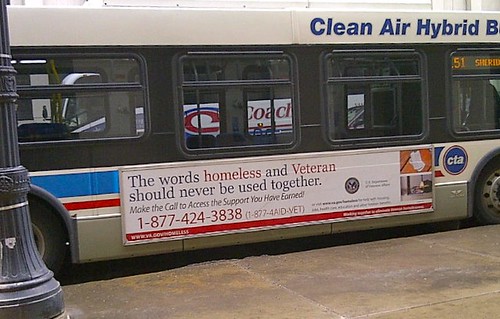
[Chicago Transit Authority bus outside Union Station.]

American Public Transportation Association
APTA awards six Local Transit Coalition Grants, which "support grassroots coalitions and their advocacy efforts to achieve public transportation goals on the state and local levels." These include education and advocacy campaigns. The current winners are:
* Arizona Transit Association (AzTA), Gilbert, AZ, which will use the grant award to support a first-ever statewide poll of voter preferences for public transit in Arizona.
* Community Transportation Association of Idaho (CTAI), Boise, ID, which is working with Idaho Smart Growth and community leaders to place the question of local option tax authority on the November 2012 ballot.
* Friends of Transit for Kalamazoo, Kalamazoo, MI, which will support grassroots advocacy efforts to secure local funding for public transportation services in Kalamazoo County and to increase public transportation funding in the state and federal budgets.
* Transit Alliance, Denver, CO, which will continue its educational efforts on the benefits of public transit in the Denver metropolitan region. The group is working with other regional stakeholders to identify ways to solidify long-term leadership and advocacy for the region’s livability.
* Transit Now Nashville (TNN), Madison, TN, which is partnering with the Metro Nashville Public Health Department to develop a pilot educational program focused on incorporating public transportation as a component of a healthy lifestyle.
* Washtenaw Partners for Transit (P4T), Ypsilanti, MI, which advocates for reliable funding to implement the 30-year Ann Arbor Transportation Authority Transit Master Plan.

Smart Growth Achievement Awards


Environmental Protection Agency

Last week at EPA, the agency celebrated this year's Smart Growth Achievement Awards. Terms like mixed-use, transit-oriented and walkable figured prominently. While none of the projects was a transit project, some provided access to transit and sought to engineer transit-oriented living. Two stand out from a transit perspective.
* LEED-platinum residential project in downtown Albuquerque, N.M., which is affordable and placed near transit, intercity transportation, restaurants and shopping. The site was previously a bus holding facility.
* Plan El Paso that envisions three mixed-use, transit-oriented neighborhoods that will make possible responsible environmental stewardship and reduced car usage. Bus rapid transit service has already started.

[View of California coast.]

Big Partnerships in a Big State


From the newsletter of the National Complete Streets Coalition:
Though most everything else is bigger in Texas, AARP Texas isn't convinced mobility options for the state's aging population are the right size. Volunteers have begun conducting pedestrian safety audits across the state, including in El Paso, Dallas, Houston, Beaumont, Sherman, San Angelo, Austin, San Antonio, and McAllen. This information will be used to make the case for more Complete Streets solutions, including a renewed push for a state law when the legislature meets again in 2013. A bi-partisan group of legislators put forward a Complete Streets bill this year, but it failed to reach the floor in either chamber.

Tuesday, November 29, 2011

Events and Local Coordination Stories

Centers for Disease Control and Prevention
Webinar - Tackling the Question: Will Complete Streets Cost Too Much? - Dec. 1, 2011. Communities Putting Prevention to Work Webinar series presentation about implementing Complete Streets policies and strategies for responding to the cost concern, including examples and resources. The webinar will provide information both about the low cost of many complete streets treatments, as well as ways to talk to transportation professionals about the added value and community support that result from complete streets implementation.

National Association of Regional Councils
Annual conference - Feb. 12-14, 2012, Washington, DC. The conference will focus on the Administration's priorities, Congressional activities, critical policy issues and pending federal legislation that will impact regions. Environmental and transportation policy, livability and the effect of the current U.S. fiscal situation will be addressed.
[View of mid-renovation Union Station area in Denver at dusk.]

Coordination Stories


The Rio Grande Valley in Texas is realistically appraising its coordination and connectivity challenges via its coordinated transportation plan. "The public transit coordination plan was completed this month to comply with Federal Transit Administration rules requiring similar plans to be in place for access to its funding streams, but the study also provided an overview of how well the Valley’s providers have implemented existing coordination efforts." An article in the Brownsville Herald, Study: Valley's Transit Providers Must Connect Services, also explains the plan for further coordination to enable commuting from one city to another in the area. Other transportation services on the horizon are medical and shopping trips and routes with consistent schedules "throughout the day in the Valley’s urbanized areas."

Binghamton, a city in Upstate New York is using its half million dollar Community Challenge Grant, the only one awarded in the state, to engage the community to envision what type of community it should be in the future and follow up on that vision by writing it into its zoning code. A brief television news piece explains.

Wednesday, November 2, 2011

NARC Speaks Up for Rural Development Funding

National Association of Regional Councils
In a letter to the Senate dated Oct. 31, NARC opposes Senator Coburn's proposed amendment to the Agriculture Appropriations Bill for Fiscal Year 2012, which NARC maintains would reduce Fiscal 2012 federal rural development spending by $1 billion or about 40 percent. Rural development funds pay for such programs as expansion of rural broadband and clean drinking water facilities. NARC states:
The amendment sponsored by Senator Coburn will further decimate an agency and programs already hard hit by budget cuts. In recent years, Congress and the Administration have repeatedly reduced annual appropriations for rural development. The FY 12 level recommended in the Senate’s version of H.R. 2112 is some $175 million below the FY 11 rate. Between 2003 and 2011, appropriations for rural water sewer, business programs and community facilities were cut by 30% and rural housing direct lending and related grant programs by over 50%.

The Coburn amendment will not only curtail improvements in housing, water and waste facilities, broadband deployment, and economic opportunity; it has the potential to displace thousands of families living in rural rental housing developments. The Senate bill contains appropriations to renew 205,000 expiring rural rental assistance contacts. The Coburn amendment requires that each rural development account is proportionately reduced (by 40%) to achieve a $1 billion reduction. Over 80,000 rural families – all of whom are low-income and most of whom are elderly or persons with disabilities – will face almost certain loss of their apartments if the amendment is approved and their rental assistance is terminated.

Tuesday, February 8, 2011

Transit a Priority for People with Disabilities, Commuters and Capitol Hill

American Public Human Services Association (APHSA)
APSHA's Working for Tomorrow newsletter recommended a Minnesota policy brief. Following the link, I found a series devoted to employment of people with disabilities and the concrete changes needed to increase their employment rates. Particularly interesting is the brief about people with visual impairments and the brief about people who are deaf and blind, probably because of the prominent position of the recommendation for improved public transportation. For more information, visit the Minnesota Employment Policy Initiative.

Census Data for Transit and Transportation


National Association of Development Organizations (NADO)
NADO's current Rural Transportation newsletter includes information helpful to anyone analyzing commuter patterns. It highlights the Census Transportation Planning Products release of the 2006 - 2008 3-year American Community Survey (ACS) Data. This release shows where people are commuting to and from and how they get there, and the data is organized by where workers live, where they work, and by the flow between those places. For more information, visit http://ctpp.transportation.org/Pages/3yrdas.aspx.

National Resource Center for Human Service Transportation Coordination
(NRC)
The NRC has a Census 2010 page, which links to a wonderful resource, the Transportation Research Board's Census Data for Transportation Planning.

Happenings on the Hill

National Association of Regional Councils
(NARC)
NARC has updated information about the fast-moving developments on Capitol Hill and Pennsylvania Avenue regarding earmarks, the federal budget and transportation.

Friday, January 28, 2011

Public Health and Safety

American Public Health Association (APHA)
APHA studies the broad health impacts that result from different transportation choices. Its resources include an issue brief, the Hidden Costs of Transportation, about the health costs of an auto-dependent transportation system.

Of practical benefit to communities that are trying to sell transit, shared rides, and zero-emission mode (walking and biking) initiatives is APHA's fact sheet about Health Impact Assessments. The Health Impact Project has more information about how HIAs are used to inform decision making for different types of public works projects, including transit, transportation and planning.


[Multi-modal street scene in Portland, Ore.]

National Association of Regional Councils (NARC)
NARC joins with the Public Safety Alliance (PSA) in urging Congress to support public safety through legislation (S. 28) that will assist in the realization of a nationwide, interoperable public safety broadband network.

Emergency Mobility

Federal Emergency Management Administration (FEMA)
The FEMA Administrator blogs about using social media to fit people and not the agency. Some of the comments following the post are amazing, particularly the one about a man who is extremely disabled who used facebook to indirectly reach the fire department when his toaster threatened major disaster.

A blog writer talks about the importance to emergency recovery of walkable streets and services available locally, such as groceries. Ken Benfield quotes a discussion about the Brisbane, Australia flooding, comparing Brisbane's street network to Beirut's:
There is what you might call 'network redundancy' i.e. every few streets has a grocers, bakers, coffee shop, ironmongers, tailors etc. etc. This, as opposed to the centralised and consolidated model of western cities, most obviously visible in the out-of-town mall accessed by car, with all the apparent economies of scale that entails. Yet the former is actually more resilient, for sure. ... It would have been better to have been in a place with a walkscore of something approaching 100 (see walkscore.com.) But there is nothing around us, barely pavements, and now the connecting infrastructure of roads is so easily compromised.

Tuesday, January 25, 2011

Winter Hibernation: Cuddle Up with Blueprint America Series and Economic Development Opportunities

Blueprint America, the PBS series about infrastructure in the United States, has some videos and reports archived that provide some interesting watching and reading for transit geeks. There are reports about competing ideas about what infrastructure to invest in, what type of transportation will create job growth, and mobility options that promote public health.

With some popcorn, a blanket and some hot chocolate, this might serve constitute work on one of those upcoming snow days - not that I would personally do that. Confession: Yes, I already watched one infrastructure documentary on a work-at-home day, but that was during lunch (soup, if I remember correctly).

Economic Development

Community Transportation Association of America
(CTAA)
The Rural and Tribal Passenger Transportation Technical Assistance Programs are inviting applications for long-term technical assistance projects. These projects help rural communities enhance economic growth and development by improving passenger transportation services and facilities. Technical assistance provides planning to support transit service improvements and expansion, system start-up, facility development, development of marketing plans and materials, transportation coordination, training and other public transit problem solving activities. Technical Assistance is provided by CTAA staff and consultants and involves on-site and off-site work conducted over a period of eight to twelve months. No local match is required. Information is available at http://web1.ctaa.org/webmodules/webarticles/anmviewer.asp?a=49&z=5.

National Association of Regional Councils (NARC)
On Feb. 8, 2011, at the 2011 Good Jobs Green Jobs Conference, NARC and its Pathways Out of Poverty project team will present a workshop on the importance of partnerships in regional workforce and economic development programs, entitled “Partnerships and Pathways: Keys to Success in Regional Green Jobs Training and Placement.” This will be a forum for sharing ideas and strategies for building a green economy that creates good jobs, reduces global warming and other environmental problems, and secures America’s economic and environmental future.

Friday, November 19, 2010

Responses to the Budget Cutting Proposal

The co-chairs of the bipartisan National Commission on Fiscal Responsibility and Reform, former Clinton White House chief of staff Erskine Bowles and retired Sen. Alan Simpson (R-Wyo.), recently issued detailed draft recommendations and a PowerPoint summary explaining their plan to significantly cut the federal budget and reduce the national debt.

Presumably, every national organization is considering the election's results and many have internally reviewed last week's budget proposal, which appears to be a first offer. This is a summary of explanations of the proposal and responses by national organizations involved with transportation and human services:

National Association of Regional Councils (NARC):
NARC offers a synopsis with an explanation of the Commission's genesis and work, a very brief run-down of the recommendations and a list of specifics about transportation and economic development funding and revenues. The synopsis links to the PowerPoint and list of recommendations.

American Association of State Highway and Transportation Officials (AASHTO): AASHTO covered the recommendations in a Nov. 12 newsletter article. Discussed was the proposed 15-cent increase in the gas tax. The article also covers another proposal for raising the tax by 25 cents. AASHTO's plan for modernizing transportation is available at http://expandingcapacity.transportation.org/.

American Public Transportation Association (APTA): APTA reviewed the proposal in its Nov. 12 newsletter. The article pointed out the recommended 15-cent increase in the gas tax. APTA is supporting the increase.

After the Election - Organizations Explain Changes

The National Association of States United for Aging and Disabilities (NASUAD): Summary of the election's results for Congress, statehouses and state legislatures. The summary goes into detail about implications for health care, supports for older Americans, and state government personnel.

National Association of Regional Councils (NARC):
NARC prepared a summary of the election and changes in Congressional leadership significant to regional planning organizations.

The National Disability Institute offered its opinion on what the election will mean.

National Conference of State Legislatures
(NCSL): NCSL provides NCSL Fiscal Brief: State Balanced Budget Provisions, which explains what is meant by a balanced budget, to which funds state constitutional and statutory provisions apply and what enforcement mechanisms exist. Interesting is how varied balanced budget requirements are. This not a one-size-fits-all term.

Wednesday, November 10, 2010

Resource Update: Planning, Livability, Economic Downturn

The National Association of Regional Councils (NARC) and the National Association of Area Agencies on Aging (N4A) are hosting a webinar, Aging & Livable Communities, on November 15. The webinar will explore how the aging population is incorporated into comprehensive regional planning and implementation. This discussion will highlight lessons learned and offer recommendations for how regional planning organizations and Area Agencies on Aging can work together to achieve tangible results. For information, visit https://www2.gotomeeting.com/register/434008555.

Easter Seals Project ACTION
offers the ADA Essentials for Transit Board Members: Fundamentals of the Americans with Disabilities Act and Transit Public Policy, produced with the American Public Transportation Association (APTA), a primer on transit's responsibility in realizing the goals of the Americans with Disabilities Act (ADA) and the legal obligations that the ADA established. The publication addresses traditional fixed-route service and transit facilities, but does not discuss deviated route or other types of service to which the ADA does not apply and impose standards. It also provides information about federal transportation initiatives related to the ADA, such as United We Ride.

NARC has also posted a presentation about significant changes in Congress, specifically shifts in leadership and priorities in both the U.S. Senate and U.S. House of Representatives.

What Is an MPO?


The Association of Metropolitan Planning Organizations (AMPO) has posted a report from the Federal Highway Administration (FHWA). The report was produced with assistance from staff at AMPO, NARC, the National Association of Development Organizations and other national planning associations. It is a terrific nuts and bolts detailed description of Metropolitan Planning Organizations (MPOs), their staffs, projects, funding, partnerships and formal arrangements with state and local governments.

Demographics and Population Needs


Though we hear news that the recession is over, it takes a long while sometimes after a downturn before people's financial circumstances bounce back. The following two reports discuss how people at both ends of the age spectrum are still suffering. The third examines demographic data about other indicators.

Young Child Poverty in 2009: Rural Poverty Rate Jumps to Nearly 29 Percent in Second Year of Recession
goes region by region and then state by state to give the numbers on child poverty. The publication also separates out the differences in each state for urban, rural and suburban areas. The numbers for child poverty provide a snapshot of where family poverty is concentrated and where poverty is increasing.

Older Americans 2010: Key Indicators of Well-Being offers data about income, physical and cognitive abilities, medical care, housing and more among the 45+ population. This is broken down so that information is easily available about those over 65, 75 and 85. The National Association of Area Agencies on Aging (N4A) produced the report.

American Community Survey briefs, products of the Census Bureau, report on public transportation usage, education, income and public assistance. This is valuable data in an easy format to keep track of demographic trends.

Accomplishments of the Sustainability Partnership

A Year of Progress for American Communities summarizes the achievements and philosophy of the Administration's Partnership for Sustainable Communities. The report briefly explains the links among housing, the environment, economic development and transit-oriented communities for people of all ages and income levels. Concise case studies are included.

Livability in Transportation Guidebook: Planning Approaches that Promote Livability is a good companion to the previously mentioned partnership publication. This report offers in-depth case studies that highlight policy and programmatic shifts to promote and design livable communities.

Rebuilding America: APA National Infrastructure Investment Task Force Report
presents the environmental and economic cases for the livability agenda of transit-oriented communities with bike and pedestrian-friendly streets as well as mobility choices. The report also examines the role of regional planning entities.

Easter Seals Project ACTION
has a new Livable Communities page on its website. Featured are ESPA's publications about accessible streets, transit, and universal design as well as links to government and other resources.

Friday, October 1, 2010

Big Plans

From small to large public transportation systems, recent announcements are reminiscent of the Daniel Burnham quote, “Make no little plans; they have no magic to stir men's blood.... Make big plans... aim high in hope and work.”

Last night, the PBS NewsHour profiled rural transit in Natchez, Miss., and the plans to build a better system that will attract many more riders. Charles Carr, director of transit services, Mississippi Department of Transportation and President of the Community Transportation Association of America (CTAA) was asked to respond to arguments that subsidies are required to fund public transit. Carr replied that subsidies are used for rail and air travel as well as roads.

Natchez Transit's director, Sabrina Bartley, plans to expand service to underserved areas, start fixed-route service, and coordinate service in 13 counties.

A Bos-Wash Dream


On the other side of the spectrum, a large sytem, Amtrak, declares its plans for high-speed service along the Northeast Corridor (NEC). None other than the Secretary of Transportation praised the unprecedented regional partnership in his blog post this morning. The NEC plan envisions trips from Washington to Boston in 3 hours and 23 minutes (compared to the current 8 hours on Amtrak's Northeast Regional trains or 6 hours and 37 minutes on Acela Express), with 220 mile-per-hour service between the major cities along the corridor. More information is available from the Potomac Express and from the Philadelphia Enquirer at http://www.philly.com/inquirer/home_top_stories/20100929_Amtrak_rolls_out_ambitious__high-speed_service_plan.html.

What's the common denominators for implementation of ambitious plans in the rural Natchez area and the states and cities along the NEC? Champions will be needed to persist in seeing the plans through and coordination at the county, state and regional levels.

Economic Message

The message that many see in ambitious public transportation plans is the creation of jobs, increasing employment within transit systems and in the communities that it serves.

The Natchez Transit director speaks of attracting business. Employers, she says, are always interested in whether their employees can get to work. For Amtrak and those supporting the NEC plan, there are estimates that thousands of jobs could be created. Amtrak's president, Joseph Boardman, says that the new high-speed rail corridor's bridges, tunnels, and stations "would create 40,000 full-time jobs per year over 25 years" and planners estimate 120,000 new permanent jobs would result from improved economic productivity along the corridor.

Green Jobs

Ambitious plans are not limited to local and intercity transportation. According to the National Association of Regional Councils (NARC), a green economy incorporates transit and coordination among regional sectors. In its discussion of green jobs in a letter to the Department of Labor, NARC points out the Kansas City regional plan. (The Department of Labor definition of
green jobs contemplates public transit.)

Mid-America Regional Council (MARC) is the multi-faceted regional planning organization representing the Kansas City bi-state region (Missouri and Kansas). MARC is a leader in developing Kansas City’s Green Impact Zone, an effort to concentrate resources — with funding, coordination, and public and private partnerships — in one specific area to demonstrate that a targeted effort can literally transform a community. This national model for place-based investment is now underway in the heart of Kansas City's urban core and has received significant federal recognition and funding. At the heart of the Green Impact Zone initiative is a project that would put area residents to work weatherizing the 2,500 homes in the zone’s neighborhoods. Another piece calls for development of a green bus rapid-transit system that would include bio-diesel buses and green bus shelters. A third piece would provide job training and employment programs for ex-parolees in green building, park restoration and transit work. The Green Impact Zone project will include an employment and training program coordinated both with zone activities and business interests outside of the zone.

Legislation

To encourage the use of commuter transit and keep it on par with driving, the American Public Transportation Association (APTA) is urging its members to contact Congress to extend the commuter tax benefit for transit riders. APTA writes in its legislative update,
Under ARRA, the transit/vanpool portion of the benefit was increased to $230 per month, treating each mode of transportation as equal. This provision is set to expire on December 31, 2010, and without an extension, the transit tax benefit would be reduced by more than half to the previous $120 per month amount.

APTA is asking Congress to either extend ARRA's higher commuter tax benefit or to "permanently equalize the transit benefit and parking benefit."

Thursday, September 16, 2010

Livable Communities : Legislative Information

The Livable Communities Act (S. 1619, H.R.4690) is proceeding in the Senate, having been approved by the Senate Committee on Banking, Housing and Urban Affairs. The Act is receiving broad support in the transit and planning communities. If passed, the bill would provide more than $2 billion in investment for planning and challenge grant programs for public and community transportation infrastructure, services, transit-oriented development and other vital efforts, all under the auspices of the innovative working partnership among the U.S. Departments of Transportation, Housing and Urban Development, and the Environmental Protection Agency.

The text of the Act and actions in Congress are available at Thomas.

Analysis of the Act

Community Transportation Association of America (CTAA) - CTAA has prepared an explanation of the Act's importance and an analysis and summary of the Act.

American Public Transportation Association
(APTA) continues to have legislative updates on its homepage and in its weekly newsletters.

National Association of Development Organizations (NADO) has its Association's testimony about the Livable Communities Act posted and linked from its home page at Latest News & Press.

National Association of Regional Councils (NARC) has a livability page devoted to resources and congressional information.

AARP
has also posted a letter to Congress in support of the Act. AARP's Public Policy Institute also has released reports about livability and seniors.

The National Association of Area Agencies on Aging (N4A) http://n4a.org/files/advocacy/campaigns/policy-priority-10.pdf

By the way, the American Public Works Association
will be participating in NARC's Regional Metropolitan and Urban Policy Forum in Austin, TX on Sept. 27-28. APWA staff will discuss sustainability, livability and infrastructure planning. APEA has more information at its Center for Sustainability

Thursday, August 26, 2010

Public Transit: Health Provider

Yes, a bus can take a person to the doctor, to work, to the supermarket, but, according to a study commissioned by the American Public Transportation Association (APTA), just having rail or bus fixed-route transit in your town or neighborhood increases the chances that you are living a healthy lifestyle and reaping its benefits. Evaluating Public Transportation Health Benefits, prepared by the Victoria Transport Policy Institute, shows that it is not so much the bus or the train itself that provides health benefits as the accouterments of places that have invested in transit and the lifestyle of walking to a stop or a station: walkable streets, less car use - whether a trip is part transit or not, fewer car crashes (injuries and fatalities), less pollution, more exercise, and fewer health problems associated with a sedentary lifestyle. What transit does accomplish for health is making possible healthier choices than those mobility options that disproportionately pollute, cause serious injury and death, and make it inconvenient to get in that all-important daily exercise.

APTA's website is filled stories of the benefits of transit. In addition to health, the annual savings average of transit over car use was pegged this year at $9,381, an average far exceeded in many major cities. If you live in Brooklyn, for example, you could save over $13,000 (of course your housing costs would be impossible, so you might want to consider a move carefully).

Planning Sustainable Communities

The Administration intends to encourage more communities to become healthier and more environmentally sustainable through the Department of Housing and Urban Development Sustainable Communities Regional Planning Grants.

The Association of Metropolitan Planning Organizations has posted advice for regions planning to apply for the grants. This includes a good explanation of what federal and other dollars may be used as matching funds. This planning grant program intends to "support metropolitan and multijurisdictional planning efforts that integrate housing, land use, economic and workforce development, transportation and infrastructure investments in a manner that empowers jurisdictions to consider the interdependent challenges of these issues specific to their region."

Another good source of information on this topic is the National Association of Regional Councils (NARC). It has a page devoted to the Sustainable Communities Regional Planning Grants and how to apply.

Wednesday, July 21, 2010

Some Great Websites

From time to time, it's good to point out places to go, virtual places that is, that are good for finding particular types of resources, what I consider my reliable sources. Unlike great chefs who do not want their secrets to be widely known (perhaps except when their cookbooks come out), I feel like it's part of my job to share information.

Going Regional

National Association of Regional Councils (NARC)
NARC is a great resource for all types of funding information for regional councils, such as livability, transportation, economic development, air quality, and emergency preparedness. Legislation is also well covered from the perspective of regional planning organizations.

By the way, NARC has an upcoming conference in Austin, Texas in late September. Here's NARC's blurb.

Regional councils of all sizes have core cities and towns that are facing issues of growth, infrastructure, security and safety. This Forum will be a discussion on recent trends and opportunities in metropolitan policy for regions, and will address related federal, state, and local issues. Regions and partners will come together to discuss recent federal action on livability, transportation, climate change and other issues.

Federal Partnership

Initiative for Sustainable Communities and States
(ISCS)
ISCS compiles the news and resources of the federal interagency sustainability partnership in one place. There is information about funding, policy, and examples for states and localities.

FTA Site A Treasure Trove of ADA Resources


Federal Transit Administration (FTA)
FTA has a multitude of resources related to the intersection of transit and the ADA. These include regulations, legal guidance, details about equitment and paratransit eligibility, and so much more. A new page has topic guides* on selected ADA topics. These offer way more details than a simple fact sheet. They are comprehensive and contain beautiful footnotes, something I really like because I enjoy (yes, enjoy) reading about the foundation for statements and background information about the text.

* As my own little footnote, the topic guide link above is to the FTA introduction page instead of the topic guide home page so that one may easily navigate back to the other FTA resources.

Tuesday, June 15, 2010

Livable Communities Act: Senate Hears from County, Regional Council Representatives

In June 9, 2010 testimony before the Senate Committee on Banking, Housing, and Urban Affairs, representatives of the National Association of Development Organizations (NADO), National Association of Regional Councils (NARC), the National Association of Counties (NACO), and the National League of Cities (NLC) testified in support of the Livable Communities Act, S. 1619.

NADO especially endorses the Act’s strong role for local governments and regional councils. A NADO board member’s hearing testimony laid out two provisions NADO would like to see included in the legislation:
1. Reserve no less than 20 percent of the regional planning and program implementation resources for small metropolitan and rural areas; and
2. Retain the bill's focus on providing incentives, not mandates, for regional development strategies that are locally developed and locally controlled on a voluntary basis, meaning absent any federal mandates.

NARC supports the Act’s voluntary, competitive and incentive-based approach to promoting comprehensive regional planning and implementation that allows each region to meet broad, federally-established goals by setting regionally-driven objectives.

NARC testimony specifically included transit as part of the interrelated transportation set of pedestrian/bicycle/transit systems and the “half-mile radius of proposed stations along the new bus rapid transit and commuter rail systems—for the economic and social benefit of the region as a whole.” Smart growth, neighborhood design, and commuter and long-distance public transportation options were the livability interests that NARC concentrated on, with a strong belief expressed in regional coordination.

NACO is pleased with legislation that meets counties where they are, with many just planning sustainability initiatives, but lacking the funds for implementation. NACO supports the multi-jurisdictional and coordinated approach that the Livable Communities Act envisions.

An NLC representative spoke of the Act’s integrated approach that coordinates the work of federal agencies that every city interacts with.

Written testimony and a video of the hearing are available at http://banking.senate.gov/public/index.cfm?FuseAction=Hearings.Hearing&Hearing_ID=1f6b01b1-bcec-41c3-80e1-cd93ae7aa161.

Wednesday, June 9, 2010

TIGER Grants

Still, getting to all of the information and emails that accumulated while I was in California. Apologies for being a bit late on this. TIGER II, the Department of Transportation grant program means funding for transit programs. Grants will be available for planning and for projects that will have a significant impact on the Nation, a metropolitan area or a region.

Information about the funding and how to apply can be found at:

Department of Transportation: DOT has a TIGER II resource page.


Federal Highway Administration webinars
: These are recorded and are available online. Webinars are covering both the discretionary and the planning grants.

National Association of Regional Councils has a good discretionary grant cheat sheet that summarizes the goals, deadlines, eligibility, application procedures, etc.