National Association of States United for Aging and Disabilities
NASUAD posts a chart that translates both the President's proposed budget and expected funding in terms of programs that serve senior citizens. Transportation is included, but the list is vast. NASUAD also released a state-of-the-state report that reviews state aging services. This is one of those reports with fascinating and informative tables for anyone interested in what states pay for which services and what is covered by Medicaid in different states.
AARP
Related to the reports described above is one that AARP prepared with NASUAD staff. On the Verge: The Transformation of Long-Term Services and Supports discusses state budgets, staffing and policy trends. Notable is a discussion of the uncertainty of the Affordable Care Act.
Paralyzed Veterans of America
PVA and other veterans groups release the annual Independent Budget, a veterans-focused analysis of the President's budget proposals, with advocacy for increased funding in particular areas. There are sections relating to employment, education and medical care. Transportation is discussed in the medical care section.

Showing posts with label AARP. Show all posts
Showing posts with label AARP. Show all posts
Thursday, February 16, 2012


Tuesday, January 17, 2012
AARP Informs Reauthorization Conversation with Equity Considerations
AARP
Expecting transportation reauthorization to happen, AARP in Transportation Funding Reform: Equity Considerations for Older Americans "examines whether current or proposed transportation funding sources at all three levels of government are in some way inequitable for low-income people, rural residents, people with disabilities, or older adults."
AARP is analyzing this issue now because revenues from the gas tax are decreasing and are increasingly inadequate to pay for our transportation infrastructure needs.
Gas Tax Most Popular Road Fee
While the current gas tax is equitable in that users pay the fees, the current gas tax is described as regressive - disproportionately costing low-income users - and further distributing costs unevenly in that it is a relative bargain for those who own fuel-inefficient vehicles and it does not charge for peak-time usage of the roads. The report also looks at alternatives to the traditional gas tax that have been popping up at the state and local levels. These include tolling and mileage fees.
The report notes that the current federal gas tax only takes into account use, but not impacts.
Sales and Other Taxes Unrelated to Driving
Though income taxes are the most progressive, they do not account for impact. Property and development-related infrastructure taxes are relatively regressive, while sales taxes are completely regressive.
In terms of older Americans, the AARP report observes that they are more likely than the general population to live in rural areas (20 percent of rural residents are over 65) and more likely to live in suburban areas of metropolitan areas. The report's interpretation of the numbers is that 70 percent of older Americans live in "low-density places, where, for example, regular fixed-route public transit use may not be a practical option." Their travel patterns indicate that older people travel more during mid-day than those 16 to 64 and less during rush hours. Their cars are older; they travel less on highways and they do not drive for much of their miles traveled.
Expecting transportation reauthorization to happen, AARP in Transportation Funding Reform: Equity Considerations for Older Americans "examines whether current or proposed transportation funding sources at all three levels of government are in some way inequitable for low-income people, rural residents, people with disabilities, or older adults."
AARP is analyzing this issue now because revenues from the gas tax are decreasing and are increasingly inadequate to pay for our transportation infrastructure needs.
Gas Tax Most Popular Road Fee
While the current gas tax is equitable in that users pay the fees, the current gas tax is described as regressive - disproportionately costing low-income users - and further distributing costs unevenly in that it is a relative bargain for those who own fuel-inefficient vehicles and it does not charge for peak-time usage of the roads. The report also looks at alternatives to the traditional gas tax that have been popping up at the state and local levels. These include tolling and mileage fees.
The report notes that the current federal gas tax only takes into account use, but not impacts.
Many analysts think it is only fair for travelers to pay a fee that takes into account the negative impacts their travel has on the highway itself (through the weight of their vehicle, for example) and the time and health costs they impose on other travelers (when they travel in the peak period or drive polluting vehicles). Without this link, drivers partially escape the financial, pollution, and health costs they impose on others and create excess demand for new highway capacity. Drivers who act to conserve gas end up subsidizing those who do not. For example, off-peak users subsidize peak-period users. Some highway advocates note that paying for public transportation (and underground storage tanks) from the HTF [Highway Trust Fund] breaks the link between those who pay and those who benefit. The transit advocates’ response to this argument is that payments into the Mass Transit Account help offset drivers’ pollution and congestion costs.Three quarters of states charge a gas tax in addition to the federal tax. States also charge user fees for car ownership, licensing, and tolls. In terms of new types of taxes, the report analyzes the equity ramifications of fees based on vehicle miles traveled (VMT) and high-occupancy lane usage (which it finds relatively non-regressive because they are not usually located in areas where people with low incomes travel in great numbers). Not mentioned are public transit fare rates.
Sales and Other Taxes Unrelated to Driving
Though income taxes are the most progressive, they do not account for impact. Property and development-related infrastructure taxes are relatively regressive, while sales taxes are completely regressive.
The improvements funded by a retail sales tax, for example, while failing to link payment to transportation system use, may provide benefits even to people who infrequently travel by car or public transportation. Living in a community with uncongested roads, a good transportation system, or a safe cycling network may have intrinsic value.The report calls for equity in terms of mobility availability for all.
Increased investment in public and community-based transportation options, highway modifications, driver assessment and training, pedestrian facilities, and attention to urban design and land use policies would help to ensure that those who pay receive their fair share of benefits.Fairness for Older Americans
In terms of older Americans, the AARP report observes that they are more likely than the general population to live in rural areas (20 percent of rural residents are over 65) and more likely to live in suburban areas of metropolitan areas. The report's interpretation of the numbers is that 70 percent of older Americans live in "low-density places, where, for example, regular fixed-route public transit use may not be a practical option." Their travel patterns indicate that older people travel more during mid-day than those 16 to 64 and less during rush hours. Their cars are older; they travel less on highways and they do not drive for much of their miles traveled.
Tuesday, December 20, 2011
What Livability Means: Rural Areas and State Policies
Last year, 32,885 people were killed on the nation's roads, according to Secretary of Transportation Ray LaHood in a recent blog post. Rural roads witness a far greater rate of accidents, injuries and deaths than urban roads. The Secretary's words are chilling.
Technical Assistance
Local coordination stories are featured in today's NRC Technical Assistance News about how communities are growing or reconsidering transit and transportation services. Stories come from York, Pa., Corpus Christi, Tx., and Portland, Or.
From our technical assistance network, an offering that national organizations and state and local stakeholders may be interested in is the National Transit Institute webinar on Jan. 12, 2012, Public Transportation Systems as the Foundation for Economic Growth (RRD 102), which examines the experiences of four cities outside the U.S., Istanbul, Cairo, Johannesburg, and Cape Town, through the eyes of staff from much-smaller American transit systems and cities who participated in the Transit Cooperative Research Program (TCRP) international study mission.
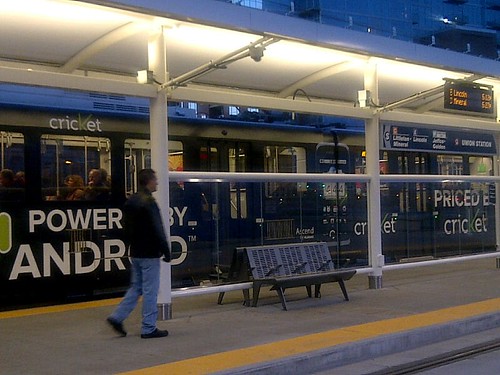
 [A light rail area of Denver's upcoming new Union Station multi-modal hub.]
What Is Rural Smart Growth?
Federal Interagency Partnership for Sustainable Communities
Supporting Sustainable Rural Communities is a partnership report that presents brief case studies and explanations of benefits of livability for rural communities. The report seeks to make the practical case for livability outside its usual metropolitan area or urban contexts. Walking, biking, transit and economic development are part of the usual cast of livability characters discussed by the federal partner agencies, the Department of Transportation, the Environmental Protection Agency, and the Department of Housing and Urban Development, in collaboration with the Department of Agriculture. A list of staff contacts at each agency appears in Appendix B.
The agencies are promoting community self-determination in rural areas, espousing particular strategies for economic vitality that also support transportation-challenged populations, historic downtowns and rural landscapes and agriculture. In an agency-cross-cultural exchange, the report explains the relevant programs of each agency to rural areas. Performance measures are suggested for each type of goal - whether environmental, housing, land use, transportation, economic. Case studies are from many sparsely populated places, especially from the Plains to the West Coast. My favorite transit-focused case studies are the Opportunity Link in Montana, the Tennessee Intercity Bus Program, and the Downeast Transportation and Island Explorer transit service in Maine, which grew out of a meals-on-wheels program.
State Legislation and Livability
AARP
I attended the recent AARP Public Policy Institute forum on aging in place and read the report connected with the event. Aging in Place: A State Survey of Livability Policies and Practices was a joint venture with the National Conference of State Legislatures. It presents case studies about transit, human services transportation, pedestrian safety, volunteer driver programs, transit-oriented development, and housing-related issues. There is an appendix with a summary of state laws and programs. AARP and NCSL "offer state legislators and officials concrete examples of state laws, policies and programs that foster aging in place."
The report gives many state legislative examples and points out which ones are mandatory and which do not actually require changes. One concrete example given of the dollars-and-cents ramifications of sprawl and exclusively auto-centric communities versus more compact and mixed-use development concerns emergency service delivery in Charlotte, N.C. [Portland's round-the-block food cart destinations are a wonderful example of a transit-oriented, mixed-use, neighborhood's potential offerings.]
Variety of State Action
The report discusses what is necessary in terms of transportation and pedestrian-friendly street networks for people to age in place and the movement at the state legislative level on related policies. From Virginia's complete streets legislation to Utah's transit-oriented development, the report contains many examples of programs and laws that are the starting blocks for communities to be hospitable to a wider range of transportation modes. An example of progress is Montana, a very sparsely-populated state.
Idaho Smart Growth
Idaho Smart Growth releases a citizen's guide that could easily function as a template for other states and communities. Language is plain for laypeople. It defines livability concepts and walks through jurisdictional responsibilities and steps for becoming involved in planning and community participation in land use, transportation, and public health decisions. Included is information specific to Idaho and local organizations, but most of the guide and resources listed are relevant nationally.
[D]river distraction continues to be a significant safety problem. For example, in a survey we're releasing ..., more than three-quarters of the drivers told us they answer calls on all, some, or most trips when they're behind the wheel. They also said there are very few driving situations when they would not use the phone or text, and that they rarely consider traffic situations when deciding to use their phone. That behavior poses a safety threat to everyone on the road.We owe our rural neighbors mobility options beyond the single-occupancy vehicle. To bring options to people in every type of community involves partnerships and an eye on the prize of what type of transportation options a community needs, or, given the realities of funding scarcity, what kind of transportation service a community or region desperately needs. This blog addresses the "how" of options that are available and what national organizations, government at every level, and other partners are doing to make getting from here to there (channeling Dr. Seuss) easier.
Technical Assistance
Local coordination stories are featured in today's NRC Technical Assistance News about how communities are growing or reconsidering transit and transportation services. Stories come from York, Pa., Corpus Christi, Tx., and Portland, Or.
From our technical assistance network, an offering that national organizations and state and local stakeholders may be interested in is the National Transit Institute webinar on Jan. 12, 2012, Public Transportation Systems as the Foundation for Economic Growth (RRD 102), which examines the experiences of four cities outside the U.S., Istanbul, Cairo, Johannesburg, and Cape Town, through the eyes of staff from much-smaller American transit systems and cities who participated in the Transit Cooperative Research Program (TCRP) international study mission.
What Is Rural Smart Growth?
Federal Interagency Partnership for Sustainable Communities
Supporting Sustainable Rural Communities is a partnership report that presents brief case studies and explanations of benefits of livability for rural communities. The report seeks to make the practical case for livability outside its usual metropolitan area or urban contexts. Walking, biking, transit and economic development are part of the usual cast of livability characters discussed by the federal partner agencies, the Department of Transportation, the Environmental Protection Agency, and the Department of Housing and Urban Development, in collaboration with the Department of Agriculture. A list of staff contacts at each agency appears in Appendix B.
The agencies are promoting community self-determination in rural areas, espousing particular strategies for economic vitality that also support transportation-challenged populations, historic downtowns and rural landscapes and agriculture. In an agency-cross-cultural exchange, the report explains the relevant programs of each agency to rural areas. Performance measures are suggested for each type of goal - whether environmental, housing, land use, transportation, economic. Case studies are from many sparsely populated places, especially from the Plains to the West Coast. My favorite transit-focused case studies are the Opportunity Link in Montana, the Tennessee Intercity Bus Program, and the Downeast Transportation and Island Explorer transit service in Maine, which grew out of a meals-on-wheels program.
State Legislation and Livability
AARP
I attended the recent AARP Public Policy Institute forum on aging in place and read the report connected with the event. Aging in Place: A State Survey of Livability Policies and Practices was a joint venture with the National Conference of State Legislatures. It presents case studies about transit, human services transportation, pedestrian safety, volunteer driver programs, transit-oriented development, and housing-related issues. There is an appendix with a summary of state laws and programs. AARP and NCSL "offer state legislators and officials concrete examples of state laws, policies and programs that foster aging in place."
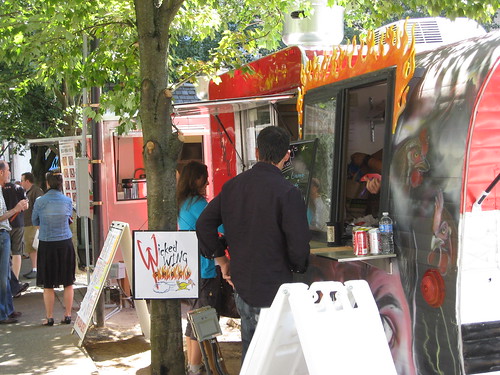
The report gives many state legislative examples and points out which ones are mandatory and which do not actually require changes. One concrete example given of the dollars-and-cents ramifications of sprawl and exclusively auto-centric communities versus more compact and mixed-use development concerns emergency service delivery in Charlotte, N.C.
Connectivity also reduces the cost of providing emergency services. In Charlotte,
the most efficient fire station—in a connected 19th-century neighborhood—served 26,930 households in 14.1 square miles with a per capita life cycle cost of $159 per year. In contrast, the least efficient station—in a sprawling community built in the 1980s and 1990s—served only 5,779 households in 8 square miles at a per capita life cycle cost of $740 per year.
Variety of State Action
The report discusses what is necessary in terms of transportation and pedestrian-friendly street networks for people to age in place and the movement at the state legislative level on related policies. From Virginia's complete streets legislation to Utah's transit-oriented development, the report contains many examples of programs and laws that are the starting blocks for communities to be hospitable to a wider range of transportation modes. An example of progress is Montana, a very sparsely-populated state.
Three years ago, the state had nine rural transportation systems; today, there are almost 40. To achieve this, the state went to city and county governments and several county Councils on Aging (each of which already operated some type of bus service) and offered to help them devise and pay for a coordinated plan. “We went to these Councils on Aging and said, ‘You’re already running a senior bus service; if you open your doors to everyone, print a schedule and follow the FTA guidelines, we will help you pull it all together and receive FTA funding,’” said [Audrey] Allums. The localities have provided matching funds by using Title III-B Older Americans Act money, property taxes, donations and other local government money.What Is a Citizen to Do?
Idaho Smart Growth
Idaho Smart Growth releases a citizen's guide that could easily function as a template for other states and communities. Language is plain for laypeople. It defines livability concepts and walks through jurisdictional responsibilities and steps for becoming involved in planning and community participation in land use, transportation, and public health decisions. Included is information specific to Idaho and local organizations, but most of the guide and resources listed are relevant nationally.
Monday, October 17, 2011
Sharing the Truth about Transportation Services & Transit
Community Transportation Association of America
CTAA's Director, Dale Marsico, provides historical context for the Federal Transit Administration's proposed changes to current policies on implementing the requirements of Title VI of the Civil Rights Act of 1964.
CTAA has a new blog, Truth in Transit. The blog contains stories about transit systems, rider experiences, and funding. It is a resource for community and public transportation leaders and advocates to share best practices in building effective, strategic relationships with local, state and federal elected officials and with other key partners. I really like the 101 piece written by a Wisconsin legislator about how to approach political leaders. The advice applies everywhere and beyond transportation.
 [Portland's Union Station.]
American Public Transportation Association
APTA releases the APTA Primer on Transit Funding - The Safe, Accountable, Flexible, Efficient Transportation Equity Act: A Legacy for Users, Extensions, and Other Related Laws, FY 2004 Through FY 2011, a report that explains all of the transit funding programs and how many dollars are authorized and appropriated for them. In another report, APTA analyzes what will happen if cost-cutting proposals become the law of the land in the next reauthorization. An Analysis of Proposed U.S. House of Representatives Actions and Their Impact on Public Transportation looks at impacts on riders, jobs, service, maintenance and new projects.
AARP
AARP has written a report about the safety and mobility considerations involved with golf-cart-like vehicles, called Low-speed vehicles (LSVs). Use in specific communities is analyzed as well as accident rates. Use of these vehicles has increased, though they are not designed for car-like speeds or impacts.
Map of Senior Transportation Programs
The Beverly Foundation has compiled a map of senior transportation that shows the number of programs in each state, where they are and a link to further information about each program.
Local Stories
Ohio Valley of West Virginia announces plans to revisit its coordinated transportation plan. The study's director sees challenges in mobility needs as well as perceived barriers of liability and funding to interstate service. See the local news video.
Like many areas of the country, Palm Beach County, Florida, is seeing an increase in transit ridership. This increase remained even during a dip in gas prices. Sundays, the only day for which there was no increase, remained steady in ridership, though service has been cut.
 [Tile art on Portland building.]
CTAA's Director, Dale Marsico, provides historical context for the Federal Transit Administration's proposed changes to current policies on implementing the requirements of Title VI of the Civil Rights Act of 1964.
[K]eep in mind that it is fair for us to be asked if we are living up not just to our responsibilities on Civil Rights under Title VI. Remembering that these proposals represent something more for us than a typical government regulation, I believe that everyone who has questions or concerns about them use the full range of comment procedures and meetings to discuss them with the FTA. I'd also urge you to suggest different strategies to provide the kind of factual information that tells our ongoing story of the role we play in expanding Civil Rights for everyone.Visit the FTA site for information about the proposals relating to civil rights and environmental justice and the ADA.
CTAA has a new blog, Truth in Transit. The blog contains stories about transit systems, rider experiences, and funding. It is a resource for community and public transportation leaders and advocates to share best practices in building effective, strategic relationships with local, state and federal elected officials and with other key partners. I really like the 101 piece written by a Wisconsin legislator about how to approach political leaders. The advice applies everywhere and beyond transportation.

American Public Transportation Association
APTA releases the APTA Primer on Transit Funding - The Safe, Accountable, Flexible, Efficient Transportation Equity Act: A Legacy for Users, Extensions, and Other Related Laws, FY 2004 Through FY 2011, a report that explains all of the transit funding programs and how many dollars are authorized and appropriated for them. In another report, APTA analyzes what will happen if cost-cutting proposals become the law of the land in the next reauthorization. An Analysis of Proposed U.S. House of Representatives Actions and Their Impact on Public Transportation looks at impacts on riders, jobs, service, maintenance and new projects.
AARP
AARP has written a report about the safety and mobility considerations involved with golf-cart-like vehicles, called Low-speed vehicles (LSVs). Use in specific communities is analyzed as well as accident rates. Use of these vehicles has increased, though they are not designed for car-like speeds or impacts.
Map of Senior Transportation Programs
The Beverly Foundation has compiled a map of senior transportation that shows the number of programs in each state, where they are and a link to further information about each program.
Local Stories
Ohio Valley of West Virginia announces plans to revisit its coordinated transportation plan. The study's director sees challenges in mobility needs as well as perceived barriers of liability and funding to interstate service. See the local news video.
Like many areas of the country, Palm Beach County, Florida, is seeing an increase in transit ridership. This increase remained even during a dip in gas prices. Sundays, the only day for which there was no increase, remained steady in ridership, though service has been cut.

Friday, September 16, 2011
Not Just Vehicles: Access to Long-Term Care, Food Assistance & Mobility
American Public Human Services Association
APHSA's concerns about Food and Nutrition Service (FNS) closure of Supplemental Nutrition Assistance Program (SNAP) offices include transportation barriers. It sees technology as a solution. "[I]implementation of office closures that are accompanied by the appropriate alternative methods and technology could not only avoid negative effects but can very likely on balance improve access and integrity." APSHA is also objecting to an FNS requirement for the SNAP that allows deduction from income of transportation costs for dependent care, which requires documentation of actual transportation expenses. "[T]he great variety of possible arrangements opens the door to errors, and requires an unwarranted amount of effort by the worker." APSHA would prefer either a federal standard or a state-by-state standard amount. Both of these documents are available on APSHA's homepage.
Long-Term Care Report Card
AARP
AARP issues its State Scorecard on Long-Term Services and Supports for Older Adults, People with Physical Disabilities, and Family Caregivers. The report asserts that quality of life, including engagement in the community, requires a long-term care support system where:
Events
Easter Seals Project ACTION
Public Involvement in the Transportation Planning Process - webinar - October 12, 2011. This webinar will provide a guide to taking and utilizing a seat at the table for transportation planning and implementation. This event will prepare transportation advocates to offer effective input that will be heard, understood and incorporated into the over-all plan.
Transcripts from ESPA's summer webinars can now be found at its website.
APHSA's concerns about Food and Nutrition Service (FNS) closure of Supplemental Nutrition Assistance Program (SNAP) offices include transportation barriers. It sees technology as a solution. "[I]implementation of office closures that are accompanied by the appropriate alternative methods and technology could not only avoid negative effects but can very likely on balance improve access and integrity." APSHA is also objecting to an FNS requirement for the SNAP that allows deduction from income of transportation costs for dependent care, which requires documentation of actual transportation expenses. "[T]he great variety of possible arrangements opens the door to errors, and requires an unwarranted amount of effort by the worker." APSHA would prefer either a federal standard or a state-by-state standard amount. Both of these documents are available on APSHA's homepage.
Long-Term Care Report Card
AARP
AARP issues its State Scorecard on Long-Term Services and Supports for Older Adults, People with Physical Disabilities, and Family Caregivers. The report asserts that quality of life, including engagement in the community, requires a long-term care support system where:
there is effective coordination or integration between health-related services (such as clinician services, medications, home health, and physical therapy) and supportive services (such as personal care, adult day, homemaker, transportation, and other services).One concrete result of high quality home and community support is the cost-saving reduction of hospital readmissions. The report emphasizes that limited data to measure services such as transportation and assistance in the home means that currently the performance of programs cannot be effectively measured. A state-by-state scorecard website looks at several measures, but does not examine anything directly related to transportation.
Events
Easter Seals Project ACTION
Public Involvement in the Transportation Planning Process - webinar - October 12, 2011. This webinar will provide a guide to taking and utilizing a seat at the table for transportation planning and implementation. This event will prepare transportation advocates to offer effective input that will be heard, understood and incorporated into the over-all plan.
Transcripts from ESPA's summer webinars can now be found at its website.
Tuesday, August 30, 2011
Caregiving Costs & FTA Policy on Access to Transit
AARP
AARP reports that transportation is a major part of caregiving for elderly relatives. Valuing the Invaluable: 2011 Update - The Economic Value of Family Caregiving in 2009, states:
Nearly four in ten (39 percent) Medicare beneficiaries report being accompanied to routine medical visits, typically by spouses or adult children. A recent analysis found that family and friends provide 1.4 billion trips per year for older relatives (age 70+) who do not drive. Adult children provide 33 percent of these trips.Taking time off to drive a parent or a spouse is not the only responsibility, though it might be one of the most time consuming. AARP also mentions the at-home medical care for people with long-term conditions as well as nursing-type care is performed after major surgeries and other critical procedures. Those people requiring the most care over long periods were individuals with chronic health conditions.
According to "more than one in three (36 percent) caregivers" due to budget cuts "government agencies and nonprofit organizations are now less able to provide services to their relative or friend" than prior to the recession. These include services such as transportation and delivered meals. This is borne out with area agencies on aging statistics in the report. Long-term effects for caregivers include a drain on financial resources and retirement savings, and negatively impacted employment prospects or advancement. Only California and New Jersey have legislation mandating paid family leave programs.

American Association of State Highway and Transportation Officials
AASHTO publicized the Federal Transit Administration's (FTA) issuance of a policy statement on the eligibility of pedestrian and bicycle improvements for funding under federal transit law - up to a radius of one-half mile for pedestrian improvements and all bicycle improvements located within three miles of a public transportation stop or station." The FTA declares a "de facto physical and functional relationship to public transportation." Funding for bicycle or pedestrian improvements at greater distances to public transportation may also be eligible for FTA funding where it is demonstrated that "the improvement is within the distance that people will travel by foot or by bicycle to use a particular stop or station." And that's just the FTA's introduction to the statement.
Details about funding are available in the NRC Technical Assistance News. The FTA policy statement appears in the Federal Register.
Friday, July 15, 2011
Living with a Transportation Challenge
AARP
AARP reiterates its concern that most older adults are lacking transportation options, particularly transit and a pedestrian-friendly street network. The result for many people is isolation as they are hesitant to ask friends and family members for assistance with non-essential trips.
N4A's Maturing of America Survey asked governments, particularly local governments, about their services for older adults. The survey notes generally the increasing population of older adults, increasing need and, with the recession, decreasing revenues to support programs.
In terms of transportation and other services, the survey finds that older adults living in urban areas are in a better situation than those who reside in rural areas. Higher population areas are more likely to provide discounted fares on public transportation, taxi discounts or vouchers, and door-to-door and door-through-door demand-response service. They are also more likely to have pedestrian-friendly sidewalks and intersections, paratransit and public transportation. The survey emphasized that the West Coast "excels in almost all transportation categories."
Multiple Disabilities
American Council for the Blind
ACB's newsletter, the Braille Forum, recently noted the ways in which we can all be sensitive to people with mobility challenges when planning events or when using public transit and accommodations. The article discusses people with visual impairments who have multiple disabilities.
American Public Health Association
A new resource for me is the APHA Transportation and Public Health E-Newsletter (link is to subscription page). Public health benefits of transit, community transportation, walking and biking, interrelated as they are, supply wonderful partners for coordination efforts and mobility initiatives. In the current newsletter issue are the following resources:
* The Road to Health Care Parity: Transportation Policy and Access to Health Care, a policy brief about the public health ramifications of our transportation system on living a healthy lifestyle and actually being able to travel to healthcare appointments.
* National Prevention Strategy, which recommends greater reliance on transit and the active transportation modes of biking and walking. One suggestion is to "[c]onvene partners (e.g., urban planners, architects, engineers, developers, transportation, law enforcement, public health) to consider health impacts when making transportation or land use decisions."
* Safe Routes to Transit and Safe Routes for Seniors programs, which are now limited to the San Francisco area and New York, respectively.
* Aging in Place, Stuck without Options: Fixing the Mobility Crisis Threatening the Baby Boom Generation, a Transportation for America report that documents the need for viable transit options so that baby boomers will be able to comfortably age in place. The report takes a hard look at rural and suburban areas, which together account for 75 percent of today's seniors.
Medicaid Tracker
National Association of States United for Aging and Disabilities
NASUAD is updating monthly its Medicaid tracker, available via its homepage. The tracker reviews the Medicaid systems in each state and summarizes any changes in eligibility and service.
Legislative Recommendations
National Council on Independent Living
NCIL has posted its summer legislative priorities, which can be opened from the homepage. Among others, the priorities include a ban on forced electroshock, support for Senate processing of judicial nominations, housing, health and medical support services, and opposition to the ADA Notifications Act, which would require 90-day notice before filing an ADA complaint. NCIL is also making requests concerning funding and the structuring of state independent living entities.
NCIL's transportation endorsements favor Complete Streets legislation, accessible taxi fleets and reauthorization of transportation legislation.
AARP reiterates its concern that most older adults are lacking transportation options, particularly transit and a pedestrian-friendly street network. The result for many people is isolation as they are hesitant to ask friends and family members for assistance with non-essential trips.
Public transportation is very limited or nonexistent in America's suburbs and rural areas, where most older people live, and there is no indication that the situation will improve soon. In fact, a recent study by Transportation for America finds that by 2015, more than 15.5 million Americans 65 and older will live in communities where public transportation service is poor or nonexistent. Further, 60 percent of people age 50 and over said in an AARP survey that they did not have public transportation within a 10-minute walk from their homes. And 53 percent said they did not have a sidewalk outside their home.National Association of Area Agencies on Aging
N4A's Maturing of America Survey asked governments, particularly local governments, about their services for older adults. The survey notes generally the increasing population of older adults, increasing need and, with the recession, decreasing revenues to support programs.
In terms of transportation and other services, the survey finds that older adults living in urban areas are in a better situation than those who reside in rural areas. Higher population areas are more likely to provide discounted fares on public transportation, taxi discounts or vouchers, and door-to-door and door-through-door demand-response service. They are also more likely to have pedestrian-friendly sidewalks and intersections, paratransit and public transportation. The survey emphasized that the West Coast "excels in almost all transportation categories."
Multiple Disabilities
American Council for the Blind
ACB's newsletter, the Braille Forum, recently noted the ways in which we can all be sensitive to people with mobility challenges when planning events or when using public transit and accommodations. The article discusses people with visual impairments who have multiple disabilities.
American Public Health Association
A new resource for me is the APHA Transportation and Public Health E-Newsletter (link is to subscription page). Public health benefits of transit, community transportation, walking and biking, interrelated as they are, supply wonderful partners for coordination efforts and mobility initiatives. In the current newsletter issue are the following resources:
* The Road to Health Care Parity: Transportation Policy and Access to Health Care, a policy brief about the public health ramifications of our transportation system on living a healthy lifestyle and actually being able to travel to healthcare appointments.
* National Prevention Strategy, which recommends greater reliance on transit and the active transportation modes of biking and walking. One suggestion is to "[c]onvene partners (e.g., urban planners, architects, engineers, developers, transportation, law enforcement, public health) to consider health impacts when making transportation or land use decisions."
* Safe Routes to Transit and Safe Routes for Seniors programs, which are now limited to the San Francisco area and New York, respectively.
* Aging in Place, Stuck without Options: Fixing the Mobility Crisis Threatening the Baby Boom Generation, a Transportation for America report that documents the need for viable transit options so that baby boomers will be able to comfortably age in place. The report takes a hard look at rural and suburban areas, which together account for 75 percent of today's seniors.
Medicaid Tracker
National Association of States United for Aging and Disabilities
NASUAD is updating monthly its Medicaid tracker, available via its homepage. The tracker reviews the Medicaid systems in each state and summarizes any changes in eligibility and service.
Legislative Recommendations
National Council on Independent Living
NCIL has posted its summer legislative priorities, which can be opened from the homepage. Among others, the priorities include a ban on forced electroshock, support for Senate processing of judicial nominations, housing, health and medical support services, and opposition to the ADA Notifications Act, which would require 90-day notice before filing an ADA complaint. NCIL is also making requests concerning funding and the structuring of state independent living entities.
NCIL's transportation endorsements favor Complete Streets legislation, accessible taxi fleets and reauthorization of transportation legislation.
Tuesday, January 18, 2011
AARP Report Shows Long-Term Care Concerns
As we are all well aware, transportation - whether transit, paratransit, taxis or other services - allow people who are disabled or who are old and fragile to remain in their homes, continuing to live in their communities. AARP's new public policy report, Weathering the Storm: The Impact of the Great Recession on Long-Term Services and Supports tracks increased demand and, in some states, reduced expenditures for transportation and other long-term care services and supports (known as LTSS).
Many of these services and supports involve transportation, such as meals on wheels and other food delivery, as well as congregate meals, adult day care, medical appointments, shopping, chore services and personal care. Though spending is down for most LTSS, large increases are seen for meals services, both home delivered and congregate.
State-by-state profiles are available at the bottom of the linked page. A compilation of all of the state profiles is an easy way to review the spectrum of state financial conditions and impacts on services nationwide.
Many of these services and supports involve transportation, such as meals on wheels and other food delivery, as well as congregate meals, adult day care, medical appointments, shopping, chore services and personal care. Though spending is down for most LTSS, large increases are seen for meals services, both home delivered and congregate.
State-by-state profiles are available at the bottom of the linked page. A compilation of all of the state profiles is an easy way to review the spectrum of state financial conditions and impacts on services nationwide.
Monday, October 25, 2010
Comprehensive Thoughts on Reauthorization
Two recent reports offer food for thought about reauthorization. One examines the macroeconomic issues at play and the other looks at the daily living needs of the population of those aging with disabilities.
Two Former Secretaries of Transportation
If we did not already know that reauthorization is overdue, the 92-page report, Well Within Reach America’s New Transportation Agenda, from the Miller Center of Public Affairs at the University of Virginia, offers 10 reasons, with plenty of analysis to support its arguments, to invest now in transportation. Yes, two former Secretaries of Transportation participated in the conference leading to the report. Specifically, it calls for:
1. Investment to ensure the global competitiveness of the United States;
2. Investment in mobility options that reduce congestion at airports and on roads, especially high speed rail;
3. Returning to a pay-as-you-go funding mechanism for the nation’s highways, such as a vehicle miles traveled (VMT) system;
4. Investment in hi-tech air travel safety systems;
5. Investment and policy reforms that reduce traffic congestion; and
6. Investment in infrastructure to prevent an erosion of the “social and economic foundations for American prosperity in the long run.”
Looking for Long-Term Solutions
The report has a long term economic perspective. Without explicit names or programs, it criticizes “short-term fixes for unemployment or other problems.” It also calls for setting of a few priorities, adequately funding them, and accounting for them as long-term investments.
The report examines the Oberstar reauthorization bill and its recommendations are consistent with the bill, particularly in the area of livability and reduction of single-occupancy-vehicle (SOV) trips. It also addresses other topics, getting into the weeds on zoning, technology, performance measures, public/private partnerships and other issues.
Transportation-Challenged Populations Left Unmentioned
Even though the report concentrates on megatrends and large problems, it leaves unmentioned the large and growing population of older adults and people with disabilities. It does not discuss those who are unable to drive, those who cannot afford a privately-owned vehicle, or those who live in rural areas. Nor does it address transportation equity.
AARP's Look at Caregiving
In Trends in Family Caregiving and Paid Home Care for Older People with Disabilities in the Community: Data from the National Long-Term Care Survey, AARP examines the levels of disability older people are living with and how they are being taken care of - whether with assistive devices, family care, and/or formal and paid care. Though the report does not discuss transportation, it does analyze the needs of a many people who do not drive. This population has increased substantially in the last 15 years.
The report offers both a sober message and recommendations.
Two Former Secretaries of Transportation
If we did not already know that reauthorization is overdue, the 92-page report, Well Within Reach America’s New Transportation Agenda, from the Miller Center of Public Affairs at the University of Virginia, offers 10 reasons, with plenty of analysis to support its arguments, to invest now in transportation. Yes, two former Secretaries of Transportation participated in the conference leading to the report. Specifically, it calls for:
1. Investment to ensure the global competitiveness of the United States;
2. Investment in mobility options that reduce congestion at airports and on roads, especially high speed rail;
3. Returning to a pay-as-you-go funding mechanism for the nation’s highways, such as a vehicle miles traveled (VMT) system;
4. Investment in hi-tech air travel safety systems;
5. Investment and policy reforms that reduce traffic congestion; and
6. Investment in infrastructure to prevent an erosion of the “social and economic foundations for American prosperity in the long run.”
Looking for Long-Term Solutions
The report has a long term economic perspective. Without explicit names or programs, it criticizes “short-term fixes for unemployment or other problems.” It also calls for setting of a few priorities, adequately funding them, and accounting for them as long-term investments.
The report examines the Oberstar reauthorization bill and its recommendations are consistent with the bill, particularly in the area of livability and reduction of single-occupancy-vehicle (SOV) trips. It also addresses other topics, getting into the weeds on zoning, technology, performance measures, public/private partnerships and other issues.
Transportation-Challenged Populations Left Unmentioned
Even though the report concentrates on megatrends and large problems, it leaves unmentioned the large and growing population of older adults and people with disabilities. It does not discuss those who are unable to drive, those who cannot afford a privately-owned vehicle, or those who live in rural areas. Nor does it address transportation equity.
AARP's Look at Caregiving
In Trends in Family Caregiving and Paid Home Care for Older People with Disabilities in the Community: Data from the National Long-Term Care Survey, AARP examines the levels of disability older people are living with and how they are being taken care of - whether with assistive devices, family care, and/or formal and paid care. Though the report does not discuss transportation, it does analyze the needs of a many people who do not drive. This population has increased substantially in the last 15 years.
The report offers both a sober message and recommendations.
Clearly, most older people want to stay in their homes and communities when disability strikes, and the data presented in this report and its companion (Redfoot and Houser 2010) document the strong trend toward greater independence among older people with disabilities. But policy discussions have been too focused on saving money and too little focused on providing the supports needed to enable older people to retain their independence. And far too little attention is paid to providing the financial, technical, and respite support needed by family caregivers who are increasingly bearing the burdens of care. Building the network of services and supports for people with disabilities and their family caregivers should be a national priority today so that tomorrow’s much larger cohorts of older people can look forward to aging with dignity and independence.
Thursday, October 7, 2010
Aging in Place News
The National Association of States United for Aging and Disabilities (NASUAD), formerly the National Association of State Units on Aging, has links to articles about the demographics of the older adult population and about how to age well in place.
One article discusses the village model, originated in the Beacon Hill neighborhood of Boston, but which has sprouted many different variations across the country. The article also touches upon the toll that end-of-life care imposes on workplaces and employees.
Community and Home Care
Unfortunately for those who wish to age in place on limited incomes, the financial condition of state and local government coffers are not in good shape. State and local services include transportation and meal deliveries, among others. According to NASUAD, "States can’t stop enrollments because these are entitlement programs. But they can cut the number of hours or visits and individual receives, and they can cut reimbursement to the providers, who already complain that their payments are too low."
Martha A. Roherty, executive director of NASUAD, adds that the shrunken government workforces will also have to meet the challenge of enrolling 16 million more people in Medicaid under the Affordable Care Act.
Who Is Living in the Community?
AARP has a brief that specifically discusses who is aging in place and at what level of independence and disability. Trends in who is caring for those who are unable to fully take care of themselves is also covered, along with who is paying for that care.
One article discusses the village model, originated in the Beacon Hill neighborhood of Boston, but which has sprouted many different variations across the country. The article also touches upon the toll that end-of-life care imposes on workplaces and employees.
Community and Home Care
Unfortunately for those who wish to age in place on limited incomes, the financial condition of state and local government coffers are not in good shape. State and local services include transportation and meal deliveries, among others. According to NASUAD, "States can’t stop enrollments because these are entitlement programs. But they can cut the number of hours or visits and individual receives, and they can cut reimbursement to the providers, who already complain that their payments are too low."
Martha A. Roherty, executive director of NASUAD, adds that the shrunken government workforces will also have to meet the challenge of enrolling 16 million more people in Medicaid under the Affordable Care Act.
Who Is Living in the Community?
AARP has a brief that specifically discusses who is aging in place and at what level of independence and disability. Trends in who is caring for those who are unable to fully take care of themselves is also covered, along with who is paying for that care.
Friday, July 30, 2010
Coordinating for Vibrant Communites
A bus system alone does not transform a community. And unless there is an accessible sidewalk and perhaps a bench, the bus will not be a solution for even those who live and work close by. However, I have seen plenty of smart growth material that does not even mention transit or long-distance transportation services. (And at least one court has ruled that poor public transit for an employee with a disability requires a reasonable accommodation. Read about the decision and resources in the NRC Technical Assistance News.)
What are the transportation issues that rural areas are paying attention to? Are transit access and connectivity among them?
Transportation Opinions from Rural Areas
Read the Four Corners Rural Transportation Forum report, recently prepared by the National Association of Development Organizations (NADO). The Four Corners rural communities of Arizona, Colorado, New Mexico and Utah are working on coordination of public transit and human services transportation, translating livability and the land-use/transportation connection for rural areas, incorporating transit into long-range transportation planning, and dealing with emerging rural growth areas.
One concern expressed about coordination was the perceived barrier of insurance/liability potential. Developments in rural coordination include establishment of one call services, statewide coordinated planning, and integration of transit and alternative modes into transportation planning. In terms of livability, these states are examining rural connectivity to cities and reinvigoration of downtowns.
A recent Government Accountability Office report, Rural Homelessness: Better Collaboration by HHS and HUD Could Improve Delivery of Services in Rural Areas suggests, though does not explicitly state, that smart growth and livability would greatly help poor and homeless rural populations. They not only have limited housing choices, but they lack transportation to connect to services and jobs. While this is not the only problem, the lack of connectivity over the long distances involved needlessly complicates life for struggling populations.
Smart Growth Geared for Rural America
The following new resources present ideas for coordination in terms of enhancing transit accessibility and use:
Putting Smart Growth to Work in Rural Communities examines different types of rural areas and the specific challenges they confront in loss of farmland, dispersed development, long distances to jobs, and rapid growth as well as long-term declines. This report promotes the benefits of transportation options, walkable main streets and downtowns, reuse of existing land, and preservation of open space.
The parts I found useful concerned redevelopment readiness (including community visioning)and transportation options. One caveat: Though the report provides ideas for economic development and preservation of open spaces, farmland and rural communities, transportation, generally, and mobility options, specifically, (including transit) are given short shrift.
Pedestrian Access to the Bus and the Community
A Blueprint America video (eight minutes) demonstrates the unsafe conditions for pedestrians on many American roads, with particular footage of inadequate bus stop access. The images and interviews are thoughtfully presented, providing a stark comparison between the priority of car travel, on the one hand, and, on the other hand, the lack of official focus on pedestrian safety and transit accessibility.
Federal Highway Administration (FHWA) has webinars and newsletters related to the ins and outs of pedestrian safety. A new webinar series is starting on Aug. 13. The seventh of eight in the series focuses on transit and pedestrians. Previous webinars are archived on the same site.
The National Highway Traffic Safety Administration (NHTSA) has released pedestrian safety materials for people whose first language is not English. Coming soon is a beginner level ESL course for learners who are not advanced, but still need to be educated on pedestrian and bicycle safety. NHSA has additional pedestrian and bike safety materials for Hispanics.
Next Steps for Pedestrian Safety and Mobility
The National Complete Streets Coalition 2010 Progress Report points to the amazing success that the coalition has achieved in helping states, regions and communities institute complete streets policies. Members of the National Consortium on the Coordination of Human Services Transportation have been instrumental to this success, particularly AARP (which has produced amazing livability and safe roads products), the American Council for the Blind, the American Public Transportation Association (APTA), and the National Association of Area Agencies on Aging (N4A), which all serve on the coalition's steering committee.
The coalition is looking forward to implementation, specifically at what elements complete streets policies include, whether these policies result in training, project development processes, design standards, and project selection criteria. The coalition will be analyzing performance measures to see whether they reflect the adopted complete streets policies and whether the outcomes are projects with improved travel for bicyclists, pedestrians, transit, and people with disabilities. The coalition "emphasizes a system-wide look at improvements, rather than measurement of individual projects against a standardized ideal."
As a lifelong pedestrian and transit user, I see safe and welcoming streets from the ground level and without expert eyes. I see the challenges from the perspective of a walker - of nonexistent, broken and inaccessible sidewalks, intersections where laws and signals allow both left and right turns during the same intervals allotted for pedestrians to cross, and streets with pedestrians running across six fast-moving lanes of cars because traffic signals are several blocks or more apart. I will throw out an ideal: places that have no right on red, scramble intersections, and traffic signal and other calming measures at walkable intervals, all to invite users other than cars, whether people are going to a train station, a bus stop or a library.
Watch a Video at Work
And in case we need any more incentives to promote transit and the streets that provide access to it, a new study shows that these symbiotic infrastructure systems lead to weight loss. Read about the Charlotte, N.C. weight-loss experience with light rail. A cute car-free diet video shows two young professional guys giving up their cars for a month in transit-friendly Arlington, Va.
What are the transportation issues that rural areas are paying attention to? Are transit access and connectivity among them?
Transportation Opinions from Rural Areas
Read the Four Corners Rural Transportation Forum report, recently prepared by the National Association of Development Organizations (NADO). The Four Corners rural communities of Arizona, Colorado, New Mexico and Utah are working on coordination of public transit and human services transportation, translating livability and the land-use/transportation connection for rural areas, incorporating transit into long-range transportation planning, and dealing with emerging rural growth areas.
One concern expressed about coordination was the perceived barrier of insurance/liability potential. Developments in rural coordination include establishment of one call services, statewide coordinated planning, and integration of transit and alternative modes into transportation planning. In terms of livability, these states are examining rural connectivity to cities and reinvigoration of downtowns.
A recent Government Accountability Office report, Rural Homelessness: Better Collaboration by HHS and HUD Could Improve Delivery of Services in Rural Areas suggests, though does not explicitly state, that smart growth and livability would greatly help poor and homeless rural populations. They not only have limited housing choices, but they lack transportation to connect to services and jobs. While this is not the only problem, the lack of connectivity over the long distances involved needlessly complicates life for struggling populations.
Smart Growth Geared for Rural America
The following new resources present ideas for coordination in terms of enhancing transit accessibility and use:
Putting Smart Growth to Work in Rural Communities examines different types of rural areas and the specific challenges they confront in loss of farmland, dispersed development, long distances to jobs, and rapid growth as well as long-term declines. This report promotes the benefits of transportation options, walkable main streets and downtowns, reuse of existing land, and preservation of open space.
The parts I found useful concerned redevelopment readiness (including community visioning)and transportation options. One caveat: Though the report provides ideas for economic development and preservation of open spaces, farmland and rural communities, transportation, generally, and mobility options, specifically, (including transit) are given short shrift.
Pedestrian Access to the Bus and the Community
A Blueprint America video (eight minutes) demonstrates the unsafe conditions for pedestrians on many American roads, with particular footage of inadequate bus stop access. The images and interviews are thoughtfully presented, providing a stark comparison between the priority of car travel, on the one hand, and, on the other hand, the lack of official focus on pedestrian safety and transit accessibility.
Federal Highway Administration (FHWA) has webinars and newsletters related to the ins and outs of pedestrian safety. A new webinar series is starting on Aug. 13. The seventh of eight in the series focuses on transit and pedestrians. Previous webinars are archived on the same site.
The National Highway Traffic Safety Administration (NHTSA) has released pedestrian safety materials for people whose first language is not English. Coming soon is a beginner level ESL course for learners who are not advanced, but still need to be educated on pedestrian and bicycle safety. NHSA has additional pedestrian and bike safety materials for Hispanics.
Next Steps for Pedestrian Safety and Mobility
The National Complete Streets Coalition 2010 Progress Report points to the amazing success that the coalition has achieved in helping states, regions and communities institute complete streets policies. Members of the National Consortium on the Coordination of Human Services Transportation have been instrumental to this success, particularly AARP (which has produced amazing livability and safe roads products), the American Council for the Blind, the American Public Transportation Association (APTA), and the National Association of Area Agencies on Aging (N4A), which all serve on the coalition's steering committee.
The coalition is looking forward to implementation, specifically at what elements complete streets policies include, whether these policies result in training, project development processes, design standards, and project selection criteria. The coalition will be analyzing performance measures to see whether they reflect the adopted complete streets policies and whether the outcomes are projects with improved travel for bicyclists, pedestrians, transit, and people with disabilities. The coalition "emphasizes a system-wide look at improvements, rather than measurement of individual projects against a standardized ideal."
As a lifelong pedestrian and transit user, I see safe and welcoming streets from the ground level and without expert eyes. I see the challenges from the perspective of a walker - of nonexistent, broken and inaccessible sidewalks, intersections where laws and signals allow both left and right turns during the same intervals allotted for pedestrians to cross, and streets with pedestrians running across six fast-moving lanes of cars because traffic signals are several blocks or more apart. I will throw out an ideal: places that have no right on red, scramble intersections, and traffic signal and other calming measures at walkable intervals, all to invite users other than cars, whether people are going to a train station, a bus stop or a library.
Watch a Video at Work
And in case we need any more incentives to promote transit and the streets that provide access to it, a new study shows that these symbiotic infrastructure systems lead to weight loss. Read about the Charlotte, N.C. weight-loss experience with light rail. A cute car-free diet video shows two young professional guys giving up their cars for a month in transit-friendly Arlington, Va.
Tuesday, July 27, 2010
CLASS Act
AARP has produced a fact sheet with details about the new legislation known as the CLASS Act. CLASS stands for Community Living Assistance Services and Supports. The Act was a piece of the health care law passed recently.
The CLASS Act sets up an insurance program that aims to help people remain in their homes once they have a:
However, though the funds are clearly inadequate for round-the-clock care, it will assist people who are partially physically or mentally impaired to stay in their homes.
No Age Requirement
Though the CLASS Act seems to be intended mainly for people who are suffering from age-related conditions, it will also provide benefits for people with disabilities, both permanent or temporary. As explained to me at the recent Health Care Colloquium held by the Community Transportation Association of America (CTAA), an insured who has a bad break on the ski slope or a three-month course of chemotherapy would be able to receive temporary benefits for cooking, cleaning and taxi services.
More details are available on the fact sheet.
The CLASS Act sets up an insurance program that aims to help people remain in their homes once they have a:
functional limitation, certified by a licensed health care practitioner, that is expected to last for at least 90 continuous days. The limitation could be at least two or three activities of daily living (such as eating, bathing, and dressing); a cognitive impairment that requires substantial supervision to protect the person from threats to health or safety; or a similar level of functional limitation.What will the CLASS Act mean for people who remain in their homes, but who wish to venture out? The benefits will enable people to pay for taxis, buses, vanpools or other transportation to any destination, whether to see a doctor, go to a movie, or have dinner with friends. Of course, the benefits will not be much, up to about $75 per day, depending on the degree of impairment. So, the money will have to also go for whatever supports a person needs - such as help with cooking and bathing.
However, though the funds are clearly inadequate for round-the-clock care, it will assist people who are partially physically or mentally impaired to stay in their homes.
No Age Requirement
Though the CLASS Act seems to be intended mainly for people who are suffering from age-related conditions, it will also provide benefits for people with disabilities, both permanent or temporary. As explained to me at the recent Health Care Colloquium held by the Community Transportation Association of America (CTAA), an insured who has a bad break on the ski slope or a three-month course of chemotherapy would be able to receive temporary benefits for cooking, cleaning and taxi services.
More details are available on the fact sheet.
Wednesday, June 9, 2010
Guide to Mobility and Transit Options for Older Adults
AARP releases The Getting Around Guide: An AARP Guide to Walking, Bicycling and Public Transportation. Written for people who wish to remain independent in the communities where they are living, the guide helps consumers take advantage of fun and healthy options for getting around without a car. It encourages walking, biking, and taking public transportation or other transportation options. The guide includes benefits of options, how to find them and use them, and what one can do to advocate for change to broaden the range of options in different places.
The guide is available as a pdf or in hard copy; actual size is just 5-1/2” x 8-1/2.” To order copies, call 1-888-OUR-AARP (1-888-687-2277) and ask for The Getting Around Guide, Stock # D19294. For more information, contact Lori Cohen at lccohen@aarp.org.
The American Public Transportation Association (APTA) report, Funding the Public Transportation Needs of an Aging Population, discusses the depth of the growing need for transportation services among Older Americans and the amounts of funding that will be necessary to provide those services. Currently, only half to two-thirds of the needs are being met for conventional transit, dial-a-ride, ADA paratransit, subsidized taxis and volunteer driver services. With the huge increase in the older population, these needs will likewise increase. The report covers universal design, planning, mobility management, coordination between government entities and all types of transportation providers, travel training, and pedestrian improvements near transit. Considerable space is given to the difficulty of predicting the levels of service and demand for the next generation of older adults.
In addition to APTA, the report was guided by input from a technical working group that included the Community Transportation Association of America, Easter Seals Project ACTION, and the AARP Public Policy Institute, all members of the National Consortium on the Coordination of Human Services Transportation.
The guide is available as a pdf or in hard copy; actual size is just 5-1/2” x 8-1/2.” To order copies, call 1-888-OUR-AARP (1-888-687-2277) and ask for The Getting Around Guide, Stock # D19294. For more information, contact Lori Cohen at lccohen@aarp.org.
The American Public Transportation Association (APTA) report, Funding the Public Transportation Needs of an Aging Population, discusses the depth of the growing need for transportation services among Older Americans and the amounts of funding that will be necessary to provide those services. Currently, only half to two-thirds of the needs are being met for conventional transit, dial-a-ride, ADA paratransit, subsidized taxis and volunteer driver services. With the huge increase in the older population, these needs will likewise increase. The report covers universal design, planning, mobility management, coordination between government entities and all types of transportation providers, travel training, and pedestrian improvements near transit. Considerable space is given to the difficulty of predicting the levels of service and demand for the next generation of older adults.
The spreadsheet tool created to produce the national estimates has been designed in a way that allows it to be used to create estimates for particular areas or to create estimates using different assumptions than the ones used in this report. The spreadsheet tool is available on the website of the American Public Transportation Association at www.apta.com.
In addition to APTA, the report was guided by input from a technical working group that included the Community Transportation Association of America, Easter Seals Project ACTION, and the AARP Public Policy Institute, all members of the National Consortium on the Coordination of Human Services Transportation.
Tuesday, June 8, 2010
Medicaid Transportation Resources
This entry is a collection of resources concerning non-emergency medical transportation (NEMT) for medicaid patients. The resources focus on the current situation of challenging economic times and on what health care reform means for medical transportation.
Community Transportation Association of America
NRC Capitol Clips explains health care reform and its ramifications for medical transportation in an ongoing series of postings.
The State of Non-Emergency Medical Transportation: A Community Transportation Magazine Essay delves into the history of Medicaid transportation, where it stands now, and how to approach the challenges that health care reform legislation is bringing to NEMT.
AARP
Policy Options to Improve Specialized Transportation, a report from AARP’s Public Policy Institute, offered not only options, but what funding and realities presently affect the delivery of specialized transportation.
Taxi, Limousine and Paratransit Association
TLPA released Non-Emergency Medicaid Transportation: How to Maximize Safety and Cost Effectiveness through Better Use of Private For-Hire Vehicle Operators. The report provided an excellent explanation of what coordination provides and what models of non-emergency medical transportation (NEMT) existed throughout the country.
Community Transportation Association of America
NRC Capitol Clips explains health care reform and its ramifications for medical transportation in an ongoing series of postings.
The State of Non-Emergency Medical Transportation: A Community Transportation Magazine Essay delves into the history of Medicaid transportation, where it stands now, and how to approach the challenges that health care reform legislation is bringing to NEMT.
AARP
Policy Options to Improve Specialized Transportation, a report from AARP’s Public Policy Institute, offered not only options, but what funding and realities presently affect the delivery of specialized transportation.
Taxi, Limousine and Paratransit Association
TLPA released Non-Emergency Medicaid Transportation: How to Maximize Safety and Cost Effectiveness through Better Use of Private For-Hire Vehicle Operators. The report provided an excellent explanation of what coordination provides and what models of non-emergency medical transportation (NEMT) existed throughout the country.
Subscribe to:
Posts (Atom)