Showing posts with label American Public Transportation Association. Show all posts

Friday, March 23, 2012

Public Health and Expanding Mobility Options

American Public Health Association
APHA has eight fact sheets devoted to the topic of how transportation modes, accidents, and the lifestyles our prevalent car culture engender affect public health.

APHA is promoting National Public Health Week, Apr. 2-8, 2012. Monday, Apr. 2 is the day designated to celebrate active living and healthy eating. The week is designed as a time to tell your tale, host an event, or introduce yourself to public health partners. Refer to the event toolkit for ideas and instructions. Transit, transportation services, and pedestrian and bike-friendly street networks (complete streets) offer exercise and access to food and all of the important destinations in life.

Faster Route to Multimodal Choices

Department of Transportation
The Secretary and the Federal Transit Administration are proposing streamlined regulations to make the review process under the National Environmental Policy Act (NEPA) more efficient and "five times" faster. More details are contained in the FTA press release and in the Federal Register notice. The notice states that "[c]omments must be received by May 14, 2012."

Ten categorical exclusions are proposed. Among these is one for "[a]cquisition, construction, rehabilitation, and improvement or limited expansion of stand-alone recreation, pedestrian, or bicycle facilities, such as: A multiuse pathway, lane, trail, or pedestrian bridge; and transit plaza amenities." Other exclusions are for rehabilitation of public transportation buildings, planning and administration, repairs within an existing right of way, acquisition and maintenance of vehicles within existing facilities, and similar activities to maintain facilities themselves. Another one that seems possibly more significant is:
Assembly or construction of facilities that is consistent with existing land use and zoning requirements (including floodplain regulations), is minimally intrusive, and requires no special permits, permissions, and uses a minimal amount of undisturbed land, such as: Buildings and associated structures; bus transfers, busways and streetcar lines within existing transportation right-of-way; and parking facilities.
The tenth exclusion is for encompassed or adjacent facilities that do not substantially enlarge the carbon footprint of a transit project, such as daycare, police or other facilities.

An important public participation aspect of the proposed regulations is that "applicants may announce project milestones using either electronic or paper media." Posting on a website of all important documents during an environmental review is encouraged. Hard copies would still be available.

Acknowledgement that Options Matter


Transportation Research Board

Keeping Baby Boomers Mobile: Preserving the Mobility and Safety of Older Americans is mostly about safe driving and roads, but it recommends enhancements to public transportation, such as:
• Ensuring public transit vehicles, facilities and stops are easily accessible and accommodating to elderly or disabled passengers.
• Expanding bus and transit routes.
• Implementing non-traditional and public sector approaches that are tailored to the needs of older adults, including ride sharing, volunteer driving programs, door-to- door community transportation services, taxi services and vehicle donation.
While the report points out that traditional fixed-route transit might not be an option for people who are frail or disabled, it does not discuss or advocate particular options.

Local Stories

Food Access - From the American Public Transportation Association newsletter is a story about transporting the supermarket to people who are transportation challenged. In areas of Columbia, MO., that the Department of Agriculture has deemed to be food deserts, a USDA grant is paying for a food bus. The city contracted with a farmer's market to provide two buses that will make stops through the food deserts and underserved areas. Promotion for the food buses include advertisements on public transit buses.

The bus route will run on 30-minute cycles from April 7 to Oct. 27, beginning at 8:15 a.m. Normal Saturday transit doesn't begin until 10 a.m. and runs in 80-minute cycles.

One-Click
- Steuben County, NY, is the home of a new website that offers the one-click portion of a one-call/one-click service for information about transportation options. An article from Bath, NY, New site outlines transit options, features mobility manager Jane Davis and describes how the website, www.NeedaRide.info, offers everything from transit schedules to rides to medical appointments. The site has information about publicly-funded options and volunteer services, as well as taxis. [Editor's Note: Jane Davis serves on the Advisory Committee of the Partnership for Mobility Management. The editor is the director of the Partnership.]

Carsharing - Car2go expands to Washington, DC and Portland, OR. This carsharing company operates differently than Zipcar and others. There is no mandatory use of particular parking spaces, no requirement that cars be reserved, and the fee is based on minutes the vehicle is rented for instead of hours. Daimler's car2go Continues Carsharing Expansion from Coast to Coast, an article from the Bradenton Herald, gives more information. There are also posters with details currently on Metro trains in Washington, DC and its suburbs.

Tuesday, February 14, 2012

Associations Educating Members, Urge Members to Contact Congress

Community Transportation Association of America
CTAA has created Reauthorization Central, which contains the different proposed bills in Congress, summaries and CTAA analysis of the legislation, key Congressional committees' documents, Department of Transportation responses and the schedule of possible Congressional actions. Letters to Congress with comments on the funding provisions also are posted, including a joint letter signed on by CTAA, the National League of Cities, the National Association of Counties, the U.S. Conference of Mayors, the National Association of City Transportation Officials, Reconnecting America, and the American Public Transportation Association.

American Public Transportation Association

APTA is strongly opposing the reauthorization proposal in the House.
The bill eliminates the Mass Transit Account of the Highway Trust Fund and creates the new Alternative Transportation Account that would provide funding for public transportation, the Congestion Mitigation and Air Quality Control (CMAQ) program, and several other programs. Dedicated funding for the new account has not yet been identified.
APTA calls for a predictable and dedicated source of funding. It is supporting a bi-partisan effort in the House to restore transit's funding source. "It is not yet clear if the Rules Committee will allow a vote on this amendment. APTA is urging a full floor vote on this amendment prior to final passage."

APTA has also prepared talking points to use when communicating with members of Congress. These include the point that "[t]he Ways and Means proposal to fund public transportation investment with a one-time appropriation would leave transit without any funding source when those funds run out in 2016."
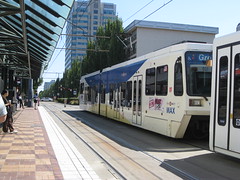
[Portland light rail near the convention center.]

Planning Organizations at Stake


Association of Metropolitan Planning Organizations

AMPO and APTA are jointly recommending to Congress that the reauthorization retain all exixting metropolitan planning organizations (MPOs), regardless of population size.
Removing the decision-making authority from the local level will reduce the voice of the local government, transit agencies, its citizens, and people in the region. Citizens elect their local public officials to reflect the unique nature of their region, and removing the MPO will only increase the distance between the average citizen and the policy-maker.
AMPO and APTA also oppose the 200,000-population threshold for all MPOs as eight states would potentially be left without one unless the Secretary grants approval that they possess the technical capacity to complete the planning requirements. Some that have served as local planning conveners since 1962 would be eliminated.

National Association of Counties
NACo is concerned about reauthorization proposals that fail to maintain planning organizations.
MPOs between 50,000-200,000 would face an uncertain future and are no longer guaranteed a role in the planning process; efforts to enhance the planning role for include rural regions under 50,000 were not successful; the Surface Transportation Program underwent some changes that may not be beneficial to local governments; and funding for the Transportation Enhancement program appears to be no longer mandatory.
[Portland's Amtrak station.]

Amalgamated Transit Union
ATU is advocating in favor of federal operating assistance for transit systems.
Now more than ever we must urge Members of Congress to do the right thing for our communities by voting yes on the amendment to adopt the original “100 Bus” language which also includes targeted and temporary operating assistance for the nation’s medium size and large transit systems which are also in the midst of a mobility crisis.

Other groups, such as Transportation for America, PolicyLink, and the League of American Bicyclists, among others, are advocating for improved transit funding and multi-modal street networks.

As we go to press, there are House members switching sides to back transit and the Senate is likely to put off a vote.
[San Luis Obispo Amtrak station.]

Local Stories

Two of the biggest logistical concerns for working parents are transportation and child care. One transit agency is doing both. To attract good employees who can work the nontraditional hours that transit and other industries demand, Prairie Transit in Spearfish, S.D., "opened its own state-licensed child care facility right in its new transit center." The article, Community care: Day care centers draw workers to towns, appeared in the Rapid City Journal.

Indianapolis, Ind. - APTA reports that IndyGo performed well during the Super Bowl festivities. The transit agency had a “Know Before You Go” campaign to alert riders to temporary route changes and offered free rides Feb. 2-5, funded by a federal Congestion Mitigation Air Quality grant.
Local fixed route ridership surpassed expectations throughout the entire detour period with a 39 percent increase over average ridership: a total of 325,212 rides over 10 days. IndyGo operated additional buses to accommodate the crowds on fixed route service, reaching a peak of 28 extra buses assisting routes on Feb. 4.

APTA's news also highlights another story, this from Cincinnati, where the Everybody Rides Metro Foundation, administered by Metro in Cincinnati, provided more than a million free rides in the past four years to low-income workers traveling to and from work, job training, and related activities. "Almost 100 agencies partner with the foundation, including Talbert House, Freestore Foodbank, St. Vincent de Paul, Lighthouse Youth Services, and Cincinnati Works."

Hi-Tech Town


Boston transit riders have hi-tech ways to get real-time information and engage in public participation. The Massachusetts Bay Transportation Authority is texting real-time information to bus riders. Just the stop identification number and the telephone number are all that is needed. And if you have a smartphone, life is even better because Boston boasts more than 40 apps for transit. Helps having lots of smart, techie college students around. The MBTA is also considering service cuts and fare increases. Like the wired town that it is, Boston's residents are commenting publicly - on twitter. That meeting is so last century. Both stories via the TransitWire.

Tuesday, February 7, 2012

Transit Users - What Influences Use; Events and Local Stories

Events

Easter Seals Project ACTION

Forming Partnerships with Transit - Online course - Feb. 13-Mar. 26. Designed for transit advocates interested in increasing their role in the design and implementation of community transportation services, the course includes four learning modules: Transportation planning, funding, becoming a transit supporter, and strategies.

Partnership for Mobility Management
2012 Mobility Management Conference - May 9-10, 2012, Long Beach, CA. To be held in conjunction with the Bus and Paratransit Conference (details below), this conference features sessions on performance measurement, forming partnerships with different organizations, non-emergency medical transportation and brokerages, customer focus, information technology, and integration of facilities. The Partnership is a collaborative effort of seven national organizations and approximately 300 individual mobility managers and mobility management professionals from around the country.

Community Transportation Association of America

EXPO conference - May 20-25, 2012, Baltimore, Md. This year's EXPO will feature tracks on mobility management, connectivity and livability, transportation operations, and management, as well as separate tracks on transportation for dialysis, veterans and employment. There will also be a two-day Job Access Conference that will focus on transportation partners, namely economic development, workforce development, employers and chambers of commerce; and highlight the many transportation options for students, job seekers, employees and businesses.

American Public Transportation Association
2012 Legislative Conference - March 11-13, 2012, Washington, DC.
Bus & Paratransit Conference - May 6-9, 2012, Long Beach, CA.
Rail Conference - June 3-6, 2012,Dallas, TX
Public Transportation & Universities Conference - June 16-19, 2012, Fargo, ND. This conference explores the unique needs of university communities and the population they serve, including the issues of universal access and land use development.

American Public Works Association
Sustainability in Public Works Conference - June 25-27, 2012, Pittsburgh, PA.

Local Stories


Children’s Health Fund
Instead of traveling to the doctor, a CHF mobile medical clinic goes to children and families. This entertaining video shows what the mobile clinics do and what that means for families.

At the other end of the age spectrum, a travel training program for older people fosters independence. This article, Program takes aim at seniors' bus fears, about a Wisconsin mobility manager who does travel training, and the older people he is training, personalizes the significance of the training and the confidence, and the mobility that using public transportation provides for those with transportation and mobility challenges. The article appeared in the GazetteXtra.com.

Transit Riders by Mode


Minetta Transportation Institute

Understanding Transit Ridership Demand for a Multi-Destination, Multimodal Transit Network in an American Metropolitan Area - Lessons for Increasing Choice Ridership While Maintaining Transit Dependent Ridership explores ridership patterns in the Atlanta area, specifically what bus and rail commuters have in common and what transit variables separate them. Though the report looks at the Atlanta area, the findings seem useful for thinking about transit possibilities and realities in other areas of the country. Here are a few excerpts. Many more details can be found in the report.

Bus riders were overwhelmingly transit-dependent riders, and rail riders included a disproportionate number of choice riders. By and large, rail riders tend to come from zones with high levels of vehicle access and bus riders from zones with low levels of vehicle access. The model results highlight important similarities as well as differences between the two rider groups. In terms of similarities, both bus and rail trips are produced in larger numbers in zones with higher populations and higher population densities, and attracted to destinations with larger numbers of jobs, but generally not areas with the highest densities of employment. Both bus and rail riders are also generally quite sensitive to in-vehicle travel time and transfer time.

In terms of differences between bus and rail riders, bus riders tend to come from zones with lower income, lower vehicle access (as noted above), and higher minority populations. While rail riders also disproportionately come from minority zones, they come from zones with high levels of vehicle access and the income variable is not significant, except in the cases of rail riders destined to more dispersed destinations, who tend to come from zones with lower incomes, but also relatively high levels of vehicle access. Bus riders do not place the same importance on out-of-vehicle travel time to transit as do rail riders ... Rail riders, on the other hand, do place a premium on out-of-vehicle travel time ... This is not surprising given the small number of rail stations and their spatial distribution relative to the patterns of population and employment in Atlanta.

TOD at Destination


The results for the land-use variables also reveal important differences between bus and rail riders as well as insights into the importance of transit-oriented development (TOD). Bus riders in Atlanta are not influenced by the presence of a transit-oriented development at either the origin or destination. The CBD does not emerge as a statistically significant destination for bus riders; indeed, lower density employment clusters emerge as important destinations for these riders. For rail riders, on the other hand, the CBD does emerge as an important travel destination, and two of Atlanta’s TODs (Midtown and North Avenue) emerge as important contributors to rail patronage, in excess of what would otherwise be predicted by the employment levels or densities of these zones.

...

Length of Wait Time Matters

The variable that had the greatest effect in determining transit ridership was the transit travel time between the origin zone and the destination zone. [T]ransit-dependent ridership, rather than being a fixed amount regardless of service quality, increases tremendously if the transit travel time between origin and destination is reduced.

...

What we see by looking at the parameters is a model that depicts more affluent, auto- owning riders using transit than does the bus model. The rail riders are willing to use rail transit to get to jobs throughout the region (not just jobs in the CBD), so long as they can walk to jobs once they get off the trains or can easily transfer to frequent buses that do not take long to reach jobs in the vicinity. CBD and TOD at the rail destination (though not at the rail origin) are highly important to potential rail riders.

...

In-vehicle travel time is relatively less important than out-of-vehicle travel time because trains are relatively fast, and their travel time is not an issue to passengers, in contrast to the depressing effect of slow buses, as shown earlier in the bus models. What really matters, however, are lengthy waits when transferring between trains and buses ... This conclusion is reinforced when we look at the tremendous impact that destination TODs have on multiplying rail ridership in comparison to the insignificant impact that origin TODs have on ridership. Where destination TODs exist, walking to the final destination is relatively short and attractive, and rail ridership to the TOD increases by 500% over what the model otherwise would predict for that zone.

Tuesday, January 31, 2012

Transit + Technology = Algorithm of Multiple Possibilities

If you are perturbed that the $230 transit benefit was not extended (the monthly benefit went back to $125 and the New York Times opinion page is not happy either), here are tools for transit and transit boosters.

According to 'I Hate the Blue Line' and Other Things Transit Systems Can Learn From Twitter, an article that appeared on the Atlantic's Cities page, transit systems should employ the free customer service data that twitter provides. What are the riders praising or complaining about? The answers are easier to find on twitter than via conventional tools, such as carefully-worded customer surveys, the author argues. I would agree that is the case in places where ridership is well connected - to apps and smartphones.

[Cute animal sculptures in Portland.]

What do people want in terms of public transportation? View this video from Kansas City. Lots of transit love and energy even from people accustomed to using their cars.

Penguins: Better than Mad Men?

And if you have 30 seconds of work time to waste, I mean be productive, view a transit ad from Belgium. Cute, has penguins; need I say more?

American Public Transportation Association
APTA's public transit ridership numbers are out and the numbers are up. What is causing the momentum in favor of transit? Thrift, environmental consciousness, quality improvements, free wifi, desire for a vacation from doing traffic battle before and after work?
This is a 2.0 percent increase over the same quarter last year, representing an increase of nearly 52 million trips. Ridership in all public transportation modes increased, led by light rail which increased by 5.8 percent.

This is also the first time in three years that ridership has increased for all three quarters. The ridership increase is attributed to a number of factors including high gas prices, improved real time passenger information, and a recovering economy.
The full ridership report is available. I usually read the whole thing, but this time I relied on the summary. If you have an extra 10 minutes or so, there are always thought-provoking details in the report as well as interesting statistics by mode and locations. APTA also posted an explanation about the transit benefit reduction and the increase in the parking benefit.


Can Technology Boost Ridership?

The answer is yes if the technology provides real-time information regionally. The Daily Iowan reports that ridership is up five percent in the one month since real-time information monitors were installed around the University of Iowa's campus - even in dorms. The article, Officials: Bus monitors help to increase ridership, goes into more detail, but implies that the transit system is the same otherwise, so that the jump in business is attributable to the one significant change. Thank you to the TransitWire for the link.

Interesting blog post from Planetizen about mapping health, commuting, income and educational patterns across the United States.

Tuesday, December 6, 2011

Local Success Stories

In the NRC Technical Assistance News
State coordinating council profiles
Mobility management grants
Livability briefs
Online dialogue about senior transportation
I&R training
FTA procurement facts

[Details high up inside Chicago's Union Station.]

Planning Assistance

National Association of Regional Councils

NARC's newsletter welcomes communities to apply for the American Planning Association's Community Planning Assistance Team (CPAT) program. Communities facing a range of challenges including, but not limited to, social equity and affordability, economic development, sustainability, consensus building, and urban design are well-suited for assistance through the program. Demonstrated need for assistance is an important qualification. The deadline for applications is Dec. 13, 2011.

Transit Partnerships


American Bus Association

The ABA celebrates the new bus deck at Union Station in Washington, D.C., making the station truly multi-modal, with intercity bus and train services as well as local transit and bikeshare. The Union Station parking garage now accommodates Megabus, Bolt Bus, Washington Deluxe, DC2NY and tour bus parking.

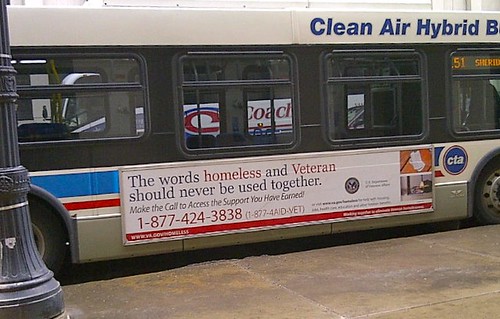
[Chicago Transit Authority bus outside Union Station.]

American Public Transportation Association
APTA awards six Local Transit Coalition Grants, which "support grassroots coalitions and their advocacy efforts to achieve public transportation goals on the state and local levels." These include education and advocacy campaigns. The current winners are:
* Arizona Transit Association (AzTA), Gilbert, AZ, which will use the grant award to support a first-ever statewide poll of voter preferences for public transit in Arizona.
* Community Transportation Association of Idaho (CTAI), Boise, ID, which is working with Idaho Smart Growth and community leaders to place the question of local option tax authority on the November 2012 ballot.
* Friends of Transit for Kalamazoo, Kalamazoo, MI, which will support grassroots advocacy efforts to secure local funding for public transportation services in Kalamazoo County and to increase public transportation funding in the state and federal budgets.
* Transit Alliance, Denver, CO, which will continue its educational efforts on the benefits of public transit in the Denver metropolitan region. The group is working with other regional stakeholders to identify ways to solidify long-term leadership and advocacy for the region’s livability.
* Transit Now Nashville (TNN), Madison, TN, which is partnering with the Metro Nashville Public Health Department to develop a pilot educational program focused on incorporating public transportation as a component of a healthy lifestyle.
* Washtenaw Partners for Transit (P4T), Ypsilanti, MI, which advocates for reliable funding to implement the 30-year Ann Arbor Transportation Authority Transit Master Plan.

Smart Growth Achievement Awards


Environmental Protection Agency

Last week at EPA, the agency celebrated this year's Smart Growth Achievement Awards. Terms like mixed-use, transit-oriented and walkable figured prominently. While none of the projects was a transit project, some provided access to transit and sought to engineer transit-oriented living. Two stand out from a transit perspective.
* LEED-platinum residential project in downtown Albuquerque, N.M., which is affordable and placed near transit, intercity transportation, restaurants and shopping. The site was previously a bus holding facility.
* Plan El Paso that envisions three mixed-use, transit-oriented neighborhoods that will make possible responsible environmental stewardship and reduced car usage. Bus rapid transit service has already started.

[View of California coast.]

Big Partnerships in a Big State


From the newsletter of the National Complete Streets Coalition:
Though most everything else is bigger in Texas, AARP Texas isn't convinced mobility options for the state's aging population are the right size. Volunteers have begun conducting pedestrian safety audits across the state, including in El Paso, Dallas, Houston, Beaumont, Sherman, San Angelo, Austin, San Antonio, and McAllen. This information will be used to make the case for more Complete Streets solutions, including a renewed push for a state law when the legislature meets again in 2013. A bi-partisan group of legislators put forward a Complete Streets bill this year, but it failed to reach the floor in either chamber.

Monday, October 17, 2011

Sharing the Truth about Transportation Services & Transit

Community Transportation Association of America
CTAA's Director, Dale Marsico, provides historical context for the Federal Transit Administration's proposed changes to current policies on implementing the requirements of Title VI of the Civil Rights Act of 1964.
[K]eep in mind that it is fair for us to be asked if we are living up not just to our responsibilities on Civil Rights under Title VI. Remembering that these proposals represent something more for us than a typical government regulation, I believe that everyone who has questions or concerns about them use the full range of comment procedures and meetings to discuss them with the FTA. I'd also urge you to suggest different strategies to provide the kind of factual information that tells our ongoing story of the role we play in expanding Civil Rights for everyone.
Visit the FTA site for information about the proposals relating to civil rights and environmental justice and the ADA.

CTAA has a new blog, Truth in Transit. The blog contains stories about transit systems, rider experiences, and funding. It is a resource for community and public transportation leaders and advocates to share best practices in building effective, strategic relationships with local, state and federal elected officials and with other key partners. I really like the 101 piece written by a Wisconsin legislator about how to approach political leaders. The advice applies everywhere and beyond transportation.

[Portland's Union Station.]

American Public Transportation Association
APTA releases the APTA Primer on Transit Funding - The Safe, Accountable, Flexible, Efficient Transportation Equity Act: A Legacy for Users, Extensions, and Other Related Laws, FY 2004 Through FY 2011, a report that explains all of the transit funding programs and how many dollars are authorized and appropriated for them. In another report, APTA analyzes what will happen if cost-cutting proposals become the law of the land in the next reauthorization. An Analysis of Proposed U.S. House of Representatives Actions and Their Impact on Public Transportation looks at impacts on riders, jobs, service, maintenance and new projects.

AARP
AARP has written a report about the safety and mobility considerations involved with golf-cart-like vehicles, called Low-speed vehicles (LSVs). Use in specific communities is analyzed as well as accident rates. Use of these vehicles has increased, though they are not designed for car-like speeds or impacts.

Map of Senior Transportation Programs

The Beverly Foundation has compiled a map of senior transportation that shows the number of programs in each state, where they are and a link to further information about each program.

Local Stories

Ohio Valley of West Virginia announces plans to revisit its coordinated transportation plan. The study's director sees challenges in mobility needs as well as perceived barriers of liability and funding to interstate service. See the local news video.

Like many areas of the country, Palm Beach County, Florida, is seeing an increase in transit ridership. This increase remained even during a dip in gas prices. Sundays, the only day for which there was no increase, remained steady in ridership, though service has been cut.
[Tile art on Portland building.]

Friday, July 8, 2011

Making Sense of Funding Available and Reauthorization Talk

Okay, may be it is just me or that my brain has shifted to the summer mode of summmers before air conditioning, but I am finding confusing the news about funding available and the reauthorization proposal and the many responses to it.

Funding - All Sustainable

TIGER grants - $527 million is available from the Transportation Investment Generating Economic Recovery (TIGER) competitive grant program. These Department of Transportation funds will be awarded for innovative transportation projects that will create jobs and have a significant impact on the nation, a region, or a metropolitan area. Pre-applications must be submitted by October 3, 2011. Final applications are due through Grants.gov by October 31, 2011.

The money may be awarded for projects beyond public transportation, such as roads and freight rail. In the past, awards have gone for transit buses, streetcars, ports, and bicycle and pedestrian paths. The TIGER website has a very cool map that allows one to peruse previous awards.

Sustainability Initiative

This Federal Transit Administration program will award funds for clean fuel and energy-reducing technologies and transit upgrades. The deadline for applications is Aug. 23, 2011.

Clean Fuels grant recipients will be chosen through a competitive selection process based on their ability to help communities achieve or maintain the National Ambient Air Quality Standards for ozone and carbon monoxide, while supporting emerging clean fuel and advanced propulsion technologies for transit buses.

TIGGER III grants, which will also use a competitive selection process, will be awarded based on a project’s ability to reduce energy consumption and greenhouse gas emissions and provide a return on the investment.

Last year's 63 winning projects involved an array of environmental innovations, such as installing energy-efficient technologies at transit facilities, replacing traditional diesel-powered buses with low- or zero-emission vehicles, and building compressed natural gas fueling stations.
Now see why I am confused? Between TIGER and TIGGER, I feel like I am stuck in a Winnie the Pooh story with Tigger bouncing and Tony the Tiger visiting, except that there are no cutely-drawn striped animals involved.

To make this somewhat easier, FTA has a website with information about its discretionary programs, the funding available and deadlines.

Livability Expansion Initiative

Other FTA discretionnary programs include the Livability Expansion Initiative, with $175 million available and a deadline of July 29. The two components include the Alternatives Analysis program and the Bus and Bus Facilities program. The goal of the Alternatives Analysis program is to assist potential sponsors of New Starts and Small Starts projects in the evaluation of all reasonable modal and multimodal alternatives and general alignments options to address transportation needs in a defined travel corridor. Priority will be given to projects that foster the six livability principles. Included in allowable expenditures for the bus program are
purchasing of buses for fleet and service expansion, bus maintenance and administrative facilities, transfer facilities, bus malls, transportation centers, intermodal terminals, park-and-ride stations, acquisition of replacement vehicles, bus rebuilds, bus preventive maintenance, passenger amenities such as passenger shelters and bus stop signs, accessory and miscellaneous equipment such as mobile radio units, supervisory vehicles, fare boxes, computers and shop and garage equipment.
The State of Good Repair program also has a July 29 deadline and has $750 million ready for maintenance and repair.

Related HUD funding

The Department of Housing and Urban Development Sustainable Communities Regional Planning grants are not yet available. Advance notice has been released that there will be $67 million on the table "towards creating stronger, more sustainable communities that connect housing to jobs while fostering local innovation and building a clean energy economy."

Reauthorization Conversation Begins Again

Both the Senate and the House have started anew serious talk about reauthorization, with Rep. John Mica (R-Fla.) proposing a one-third cut in highway and transit funding and a six-year bill. Sen. Barbara Boxer has put forth a two-year bill.

The SAFETEA-LU extension will expire on September 30, but it is anyody's guess whether the current discussions will lead to new legislation or another extension. Here is information about the proposals and the perspective of some members of the National Consortium on the Coordination of Human Services Transportation.

American Public Transportation Association - transit perspective on the Mica reauthoriization proposal.

American Association of State Highway Transportation Officials - coverage of House and Senate activity, with discussion of the current divide between Democrats and Republicans on each.

Amalgamated Transit Union - Responds negatively to the Mica proposal. Says the proposal will cause massive layoffs among transit workers and the service reductions "would be the knockout punch that puts millions of more people on the unemployment line."

Monday, June 27, 2011

Joint Actions, Legislation and FTA Update

American Public Health Association
APHA has 10 Public Health and Equity Principles for Transportation, which include increased funding for community transportation, transportation for mobility-challenged populations, multi-modal infrastructure and planning, and reducing carbon emissions. Signatories include the Community Transportation Association of America (CTAA) as well as pedestrian and biking advocates, and public health and medical associations.

Inter-Agency Partnership for Sustainable Communities

Smart Growth America announces the 50 organizations that sent a joint letter to the Senate leadership for appropriations and transportation urging funding for the inter-agency partnership for sustainable communities. Those 50 include the National Association of Area Agencies on Aging (N4A), the National Association of Development Organizations (NADO), and the Amalgamated Transit Union, all members of the National Consortium on the Coordination of Human Services Transportation, as well as organizations devoted to planning, the environment, health and transportation equity.

Federal Transit Administration
FTA has released federal register notices of funding opportunities with deadlines this summer.
* State of good repair funds for buses and bus facilities - deadline July 29.
* Discretionary Sustainability Funding Opportunity Transit Investments - deadline Aug. 23. The funds are specifically for the Greenhouse Gas and Energy Reduction (TIGGER) Program and Clean Fuels Grant Program, Augmented With Discretionary Bus and Bus Facilities Program.
* Discretionary livability funding - deadline July 29. The programs involved are Section 5309 Bus and Bus Facilities Livability Initiative Program Grants and Section 5339 Alternatives Analysis Program.

FTA also announced apportionment of new starts and small starts funds. These go beyond coast to coast to serve places unconnected to the mainland, including Alaskan and Hawaiian ferries and the Second Avenue subway in Manhattan.

Another funding announcement made recently was the Department of Housing and Urban Development's Advance Notice of Requirements for HUD’s FY11 Sustainable Communities Regional Planning Grant Program, which will provide an additional $67 million for building sustainable communities throughout the country.

Convenient Places to Live and Work

American Public Transportation Association
(APTA)
APTA helped craft the listing of today's 10 most convenient cities, as measured by transit access and walkability. In addition to the obvious ones of New York, Chicago, Seattle, Boston and Portland, there is also Milwaukee and Los Angeles.

Enthusiastic Legislative Support


National Council on Independent Living
NCIL is strongly endorsing and working for independent living (IL) legislation pending in Congress. The IL provisions within the reauthorization of the Workforce Investment Act would create an IL Administration, which would not require any new or additional funding, but would streamline the IL Program and enhance consumer-control. This new entity would be independent of the Rehabilitation Services Administration (RSA) within the Department of Education.

Wednesday, June 15, 2011

Resources to Dump the Pump

American Public Transportation Association
Remind your constituencies to participate in National Dump the Pump Day, Thursday, June 16. Secretary LaHood is encouraging people to take transit that day and save money, reduce "our nation's dependence on foreign oil," and "discover an economical, comfortable, stress-free option for getting around that they hadn't considered before." More information is available from APTA, which has materials for promoting and publicizing Dump the Pump Day, including button templates, sample proclamations and suggested activities.

Community Transportation Association of America
CTAA joins with Families USA and other groups to support the Medicaid program and oppose the suggested transformation of Medicaid into a block grant program. "Medicaid is an important program for many public and community transportation systems around the country and the Association feels strongly that it must be protected in the ongoing budget debates in Washington," said CTAA Executive Director Dale J. Marsico, CCTM.

NRC Capitol Clips
explains how a Department of Housing and Urban Development (HUD) funding programs offer opportunities for transportation options and mobility management efforts. Deadlines are coming up at the end of June and mid-July.

Big City Resources are Transferable


Okay, Brooklyn is not the first place in the country to post or allow posting of bus arrival times or to arrange for text messages to riders and smartphone access to a transit authority website, but a New York TV station did a nice little video about how the bus arrival notification system works. For Brooklynites, the information will mean a few more minutes to shop, but I think this type of system, which depends on business owners as much as the transit system because shops display bus arrival times in their windows, has even more potential for rural riders. With headways of an hour being common, people would be able to not only have time to shop, but to alert babysitters and bosses of delays, perhaps even to sit down somewhere and use an extra fifteen minutes to get something else done instead of looking up the road for the bus.

San Fransisco is utilizing its army of riders to send notices of what needs fixing. First, the transit agency asked for text messages about graffiti and vandalism locations and now it is about to unroll the same type of service for problems with cleanliness and security. Again, these are issues as much for rural as urban transit systems. In fact, this type of communication with riders probably would be more significant for a small operation with limited resources.

For these two stories, I am grateful to the Transit Wire, which I read each day. It is mostly technology/transit stories related to large urban systems, but it sometimes features small urban systems and their innovations, such as the recent start of free wifi on buses in Missoula, Mont.

Thursday, March 17, 2011

Praise for Transit and Improving the Experience for People with Disabilities

Always a good day when you read about people and organizations you personally know. Today it is the American Public Transportation Association. I read many of Secretary LaHood's blog posts on the Fastlane. (Yes, I skip stuff related to airlines and anything on the water except for taxis and ferries.) Today, I find the Secretary praising APTA for its mission to "strengthen and improve public transportation,":
a goal this Department deeply believes in. This Administration has made transportation a priority--and affirmed that commitment, not just with words, but also with actions. President Obama’s 2012 budget proposal invests $129 billion in transportation. We’re talking about a 127% increase in support aimed at improving safety, service, and reliability.
After reviewing the proposed budget's transit priorities, Secretary LaHood spoke generally about the contributions of public transit, saying that "[p]ublic transportation connects Americans," takes them to airports, downtowns, jobs, essential services, education and shopping, while relieving congestion.
Every day in our cities and towns, transit workers are planning, building, maintaining, repairing and operating these vital systems. Here at DOT, we think that’s incredibly important.
The Secretary quoted from his speech at the APTA Legislative Conference.

People with Disabilities Invited to Rate Service

Speaking of public transit service, a former colleague, Judy Shanley, pointed me to a survey on the website of the Center for Inclusive Design and Environmental Access that requests people with disabilities to share their public transit experiences. Of course, I can never stop with the one recommended feature and explored the website further. There is information about and links to resources involving rural aging in place, naturally occurring retirement communities (NORCS), and universal design for housing.

Easter Seals Project ACTION points out that IDEA also has published a wheelchair users mobility report that includes new data on wheeled mobility devices people with disabilities use, including data about ease of use and navigating spaces. The report recommends that standards be revised to reflect body size and functional abilities of current wheelchair users.

Great Minds Think Alike

Two national parters, Easter Seals Project ACTION and the Taxi, Limousine and Paratransit Association pointed me to the big news that the Department of Energy (DOE) is loaning $50 million to develop a "six-passenger MV-1, a purpose-built wheelchair accessible vehicle that will run on compressed natural gas." According to DOE,
[The] MV-1 is the only factory-built light-duty vehicle to date that meets or exceeds the guidelines of the Americans with Disabilities Act. The vehicle features a deployable access ramp with a 1,200-pound weight capacity, a 36-inch entryway and an interior that accommodates up to six occupants with the optional jump seat, including one or two wheelchair passengers and the driver.
Getting to and Navigating Transit

Easter Seals Proejct ACTION
Webinar series - The Cutting Edge of Wayfinding Technology - Apr. 4 and 11 at 2 ET. The webinars will cover wayfinding technologies that help customers with disabilities navigate transit systems. The two sessions will discuss new technologies that are either available to the public or currently being researched. Visit ESPA's homepage for information about the organization's many events about accessibility, transportation, and improving transportation options for people with disabilities.

Wednesday, March 9, 2011

American Public Transportation Association (APTA)
APTA reports rising savings for using public transit (and walking or biking) instead of owning a car. Currently, the national average stands at "$9,904 annually and $825 per month based on the March 4, 2011 average national gas price ($3.47 per gallon-reported by AAA) and the national unreserved monthly parking rate." The savings are more impressive in the nation's largest - and most transit-rich cities - with savings of over $14,000 in New York and over $10,000 in Denver. Prices in metropolitan areas and other regions are not assessed; suburban and rural equivalents of the savings rates are not available.

In this same vein, the APTA savings report is featured in a CBS News story about the financial rationale for using transit, on the one hand, and, on the other, the revenue squeeze on transit that has prompted systems to reduce service and/or increase fares.

Public Participation: Not Necessarily Boring


If you are looking to promote public participation in transit promotion, planning and advocacy, view this creative video from Detroit, which uses legos and music to discuss the street configuration for the planned Woodward Ave. line.

Thanks to Chris Zeilinger, Director of the National Resource Center for Human Service Transportation Coordination (NRC) for finding the video material.

The Utah Transit Authority is promoting and using twitter to hear from its customer base about their preferences for service hours and routes. Although the transit system is also employing traditional public hearings and now old-fashioned email as well, management has respect for the thoughtful, quality 140-character (and fewer) tweets they have received.

Livability Goes Local


National Association of Counties
(NACo)
From NACo's newsletter:
NACo will seek input from members about implementing federal livability goals through a new project led by the National Association of Regional Councils (NARC), with support from U.S. Department of Transportation. The two-year project is intended to assist localities in building the governance, strategies and tools needed to create and implement regional transportation plans that support sustainable development. NARC and NACo will partner to offer listening sessions at upcoming NACo conferences.
Contact: James Davenport • 202.661.8807

Monday, February 14, 2011

Happy Valentine's Day

Transit is not just for policy geeks and people who need a ride. Transit, according to the Valentine's Day post on the CityFix blog, is for lovers and lovers of transit.

Read about romantic encounters and creative transit promotions. Honestly, the marriage of transit and love could put Valentine's Day ahead of Halloween.


Resources


National Head Start Association (NHSA)
NHSA has posted a national map of Head Start investments by state.

National Governors' Association
(NGA)
NGA released an analysis of the state-of-the-state addresses from the nation's governors. Read about priorities and challenges across the nation.

Government Accountability Office (GAO)
Rail Transit: FTA Programs Are Helping Address Transit Agencies’ Safety Challenges, but Improved Performance Goals and Measures Could Better Focus Efforts may say "rail" in the title, but the discussion of a "safety culture," seems to apply to transit and transportation services of all types. The GAO report states:

One expert in particular said that all the other safety challenges transit agencies faced flow from safety culture issues. Some experts we interviewed identified the importance of training to help instill a safety culture at all levels of a transit agency.

Federal Transit Administration
(FTA) officials used qualitative language to describe the attributes of a safety culture, including non-punitive reporting. But they also cited quantifiable measures of cost, hiring challenges, old infrastructure and other issues that impact safety.

FTA efforts include an FTA-produced video, “A Knock at Your Door,” which re-enacts fatal rail transit accidents to underscore the importance of safety procedures. FTA officials also mentioned that they have encouraged discussions about the importance of safety culture at roundtable meetings with transit agency management and other officials, teleconferences, and training classes.

Safety Courses

Community Transportation Association of America (CTAA)
CTAA has a course to train Certified Safety and Security Managers. The training offers a protocol for on-site assessments by Certified Safety and Security Managers of their respective transit systems preparedness in the critical components and core elements of the Federal Transit Administration's Bus Safety and Security Program.

American Public Transportation Association (APTA)
Information about APTA's safety resources and training can be located at http://www.apta.com/resources/safetyandsecurity/Pages/default.aspx.

Friday, January 7, 2011

Making the Most of Transit

The American Public Transportation Association (APTA) has added a mobility management page to its website. In addition to explaining what mobility management means for APTA's membership of transit agencies across the country, the site has articles that explain the business case for this approach and why partnerships, a customer focus and a reduced emphasis on "rolling stock" are in the interests of communities and transit.

The National Endowment for the Arts published a report on Creative Placemaking, that includes use of art in transit infrastructure. Though the report is not primarily transit oriented, it makes the case to communities, planners, and transit staff that public art enhances the value of all types of public works projects.

Who is the guy standing outside the subway station at Metro Center? It's Abe Lincoln letting people know about Nationals games, where he races a few fellow past presidents.

Resources for Transportation-Challenged Populations

Children’s Health Fund (CHF)
CHF has presentations and publications that discuss transportation as a critical link to health care for people with low incomes. Information about CHF's positions regarding health care legislative issues are also available.

Easter Seals Project ACTION is currently accepting applications for the 2011 Accessible Transportation Coalitions Initiative.

This initiative helps communities ready to tackle accessible transportation challenges and engage local leaders in the process. Ten communities across the United States will be selected to participate in the Accessible Transportation Coalitions Initiative (ATCI), a one-year systems change process designed to improve accessible transportation options for people with disabilities. In order to be considered, the completed application must be submitted on or before January 31, 2011.

ESPA is also conducting an online survey about the connection between hospital discharge planning and access to appropriate transportation options.

Friday, November 19, 2010

Responses to the Budget Cutting Proposal

The co-chairs of the bipartisan National Commission on Fiscal Responsibility and Reform, former Clinton White House chief of staff Erskine Bowles and retired Sen. Alan Simpson (R-Wyo.), recently issued detailed draft recommendations and a PowerPoint summary explaining their plan to significantly cut the federal budget and reduce the national debt.

Presumably, every national organization is considering the election's results and many have internally reviewed last week's budget proposal, which appears to be a first offer. This is a summary of explanations of the proposal and responses by national organizations involved with transportation and human services:

National Association of Regional Councils (NARC):
NARC offers a synopsis with an explanation of the Commission's genesis and work, a very brief run-down of the recommendations and a list of specifics about transportation and economic development funding and revenues. The synopsis links to the PowerPoint and list of recommendations.

American Association of State Highway and Transportation Officials (AASHTO): AASHTO covered the recommendations in a Nov. 12 newsletter article. Discussed was the proposed 15-cent increase in the gas tax. The article also covers another proposal for raising the tax by 25 cents. AASHTO's plan for modernizing transportation is available at http://expandingcapacity.transportation.org/.

American Public Transportation Association (APTA): APTA reviewed the proposal in its Nov. 12 newsletter. The article pointed out the recommended 15-cent increase in the gas tax. APTA is supporting the increase.

Tuesday, October 26, 2010

Transit Funding Problems Prompt National Meeting

Decreased transit funding and declining revenue due to the recession are causing service cutbacks and layoffs in the transit industry, now at more than 3000. The Amalgamated Transit Union convened a meeting of national organizations and union locals, to work together bring to the public's attention the need for transit service. The meeting focused on jobs, community organizing, and forming a message for a national campaign.

Among the participants were the Community Transportation Association of America (CTAA), Transportation for America, and Reconnecting America.

Ridership Increases


Despite the recession, or maybe somewhat because of it, transit ridership is again on the rise, according to the American Public Transportation Association (APTA), showing a .1 percent increase in the second quarter of 2010.

Friday, October 1, 2010

Big Plans

From small to large public transportation systems, recent announcements are reminiscent of the Daniel Burnham quote, “Make no little plans; they have no magic to stir men's blood.... Make big plans... aim high in hope and work.”

Last night, the PBS NewsHour profiled rural transit in Natchez, Miss., and the plans to build a better system that will attract many more riders. Charles Carr, director of transit services, Mississippi Department of Transportation and President of the Community Transportation Association of America (CTAA) was asked to respond to arguments that subsidies are required to fund public transit. Carr replied that subsidies are used for rail and air travel as well as roads.

Natchez Transit's director, Sabrina Bartley, plans to expand service to underserved areas, start fixed-route service, and coordinate service in 13 counties.

A Bos-Wash Dream


On the other side of the spectrum, a large sytem, Amtrak, declares its plans for high-speed service along the Northeast Corridor (NEC). None other than the Secretary of Transportation praised the unprecedented regional partnership in his blog post this morning. The NEC plan envisions trips from Washington to Boston in 3 hours and 23 minutes (compared to the current 8 hours on Amtrak's Northeast Regional trains or 6 hours and 37 minutes on Acela Express), with 220 mile-per-hour service between the major cities along the corridor. More information is available from the Potomac Express and from the Philadelphia Enquirer at http://www.philly.com/inquirer/home_top_stories/20100929_Amtrak_rolls_out_ambitious__high-speed_service_plan.html.

What's the common denominators for implementation of ambitious plans in the rural Natchez area and the states and cities along the NEC? Champions will be needed to persist in seeing the plans through and coordination at the county, state and regional levels.

Economic Message

The message that many see in ambitious public transportation plans is the creation of jobs, increasing employment within transit systems and in the communities that it serves.

The Natchez Transit director speaks of attracting business. Employers, she says, are always interested in whether their employees can get to work. For Amtrak and those supporting the NEC plan, there are estimates that thousands of jobs could be created. Amtrak's president, Joseph Boardman, says that the new high-speed rail corridor's bridges, tunnels, and stations "would create 40,000 full-time jobs per year over 25 years" and planners estimate 120,000 new permanent jobs would result from improved economic productivity along the corridor.

Green Jobs

Ambitious plans are not limited to local and intercity transportation. According to the National Association of Regional Councils (NARC), a green economy incorporates transit and coordination among regional sectors. In its discussion of green jobs in a letter to the Department of Labor, NARC points out the Kansas City regional plan. (The Department of Labor definition of
green jobs contemplates public transit.)

Mid-America Regional Council (MARC) is the multi-faceted regional planning organization representing the Kansas City bi-state region (Missouri and Kansas). MARC is a leader in developing Kansas City’s Green Impact Zone, an effort to concentrate resources — with funding, coordination, and public and private partnerships — in one specific area to demonstrate that a targeted effort can literally transform a community. This national model for place-based investment is now underway in the heart of Kansas City's urban core and has received significant federal recognition and funding. At the heart of the Green Impact Zone initiative is a project that would put area residents to work weatherizing the 2,500 homes in the zone’s neighborhoods. Another piece calls for development of a green bus rapid-transit system that would include bio-diesel buses and green bus shelters. A third piece would provide job training and employment programs for ex-parolees in green building, park restoration and transit work. The Green Impact Zone project will include an employment and training program coordinated both with zone activities and business interests outside of the zone.

Legislation

To encourage the use of commuter transit and keep it on par with driving, the American Public Transportation Association (APTA) is urging its members to contact Congress to extend the commuter tax benefit for transit riders. APTA writes in its legislative update,
Under ARRA, the transit/vanpool portion of the benefit was increased to $230 per month, treating each mode of transportation as equal. This provision is set to expire on December 31, 2010, and without an extension, the transit tax benefit would be reduced by more than half to the previous $120 per month amount.

APTA is asking Congress to either extend ARRA's higher commuter tax benefit or to "permanently equalize the transit benefit and parking benefit."

Monday, September 27, 2010

AASHTO and APTA Publicize Individual and Societal Transit Needs

The American Association of State Highway and Transportation Officials (AASHTO) recommends a large increase in rural public transit funding due to the increase in demand and the aging population that wishes to remain in their communities. Transportation Reboot: Restarting America’s Most Essential Operating System - The Case for Capacity: To Unlock Gridlock, Generate Jobs, Deliver Freight, and Connect Communities discusses the numbers involved and stories of communities and individuals.

Collective and Individual Needs for Transit

And communities are wanting transit. AASHTO is reporting that the Department of Transportation (DOT) received applications from every state for its TIGER grants, worth 32 times the amount of funds available. These funds will be awarded on a competitive basis.

In case anyone doubts the personal stories that go along with the need for transit, visit the new page of the website of the American Public Transportation Association (APTA). APTA has a video wall of individuals who use transit. The people videotaped describe their needs, their transit experiences and their gratitude for quality service. The video wall is part of APTA's reauthorization public relations effort to emphasize the importance of transit in people's lives.

Thursday, September 16, 2010

Livable Communities : Legislative Information

The Livable Communities Act (S. 1619, H.R.4690) is proceeding in the Senate, having been approved by the Senate Committee on Banking, Housing and Urban Affairs. The Act is receiving broad support in the transit and planning communities. If passed, the bill would provide more than $2 billion in investment for planning and challenge grant programs for public and community transportation infrastructure, services, transit-oriented development and other vital efforts, all under the auspices of the innovative working partnership among the U.S. Departments of Transportation, Housing and Urban Development, and the Environmental Protection Agency.

The text of the Act and actions in Congress are available at Thomas.

Analysis of the Act

Community Transportation Association of America (CTAA) - CTAA has prepared an explanation of the Act's importance and an analysis and summary of the Act.

American Public Transportation Association
(APTA) continues to have legislative updates on its homepage and in its weekly newsletters.

National Association of Development Organizations (NADO) has its Association's testimony about the Livable Communities Act posted and linked from its home page at Latest News & Press.

National Association of Regional Councils (NARC) has a livability page devoted to resources and congressional information.

AARP
has also posted a letter to Congress in support of the Act. AARP's Public Policy Institute also has released reports about livability and seniors.

The National Association of Area Agencies on Aging (N4A) http://n4a.org/files/advocacy/campaigns/policy-priority-10.pdf

By the way, the American Public Works Association
will be participating in NARC's Regional Metropolitan and Urban Policy Forum in Austin, TX on Sept. 27-28. APWA staff will discuss sustainability, livability and infrastructure planning. APEA has more information at its Center for Sustainability

Thursday, August 26, 2010

Public Transit: Health Provider

Yes, a bus can take a person to the doctor, to work, to the supermarket, but, according to a study commissioned by the American Public Transportation Association (APTA), just having rail or bus fixed-route transit in your town or neighborhood increases the chances that you are living a healthy lifestyle and reaping its benefits. Evaluating Public Transportation Health Benefits, prepared by the Victoria Transport Policy Institute, shows that it is not so much the bus or the train itself that provides health benefits as the accouterments of places that have invested in transit and the lifestyle of walking to a stop or a station: walkable streets, less car use - whether a trip is part transit or not, fewer car crashes (injuries and fatalities), less pollution, more exercise, and fewer health problems associated with a sedentary lifestyle. What transit does accomplish for health is making possible healthier choices than those mobility options that disproportionately pollute, cause serious injury and death, and make it inconvenient to get in that all-important daily exercise.

APTA's website is filled stories of the benefits of transit. In addition to health, the annual savings average of transit over car use was pegged this year at $9,381, an average far exceeded in many major cities. If you live in Brooklyn, for example, you could save over $13,000 (of course your housing costs would be impossible, so you might want to consider a move carefully).

Planning Sustainable Communities

The Administration intends to encourage more communities to become healthier and more environmentally sustainable through the Department of Housing and Urban Development Sustainable Communities Regional Planning Grants.

The Association of Metropolitan Planning Organizations has posted advice for regions planning to apply for the grants. This includes a good explanation of what federal and other dollars may be used as matching funds. This planning grant program intends to "support metropolitan and multijurisdictional planning efforts that integrate housing, land use, economic and workforce development, transportation and infrastructure investments in a manner that empowers jurisdictions to consider the interdependent challenges of these issues specific to their region."

Another good source of information on this topic is the National Association of Regional Councils (NARC). It has a page devoted to the Sustainable Communities Regional Planning Grants and how to apply.

Thursday, August 5, 2010

News from State Public Transportation Partnerships Conference

Okay, I will try to write about the conference and not keep dreaming about living in Seattle so that I can spend more time in a beautiful city where you see seagulls and you can walk to the ballpark. I personally recommend the Ebbets Field Flannels store. (Yes, the owner and the salesperson are from Brooklyn, Park Slope in this case.)

What partnerships are everyone talking about? Every type of coordination has been mentioned, from collaboration with states Department of Justice to students from local colleges. Creative use of facebook, twitter, and bus roadeos are being discussed. Recommended for roadeo success were a barbecue at the roadeo and local radio station participation.

Tidbits of Useful Practices


1. Use of college students to advocate and campaign for transit funding and ballot measures. They use facebook in a viral way, which exponentially garners support.
2. Partnering at the local, state and federal way. These partnerships can mirror the federal sustainability partnership, work on traditional connections to human service agencies, and can involve everyone else.
3. Focus on how transit and mobility services help every constituency and agency. One example was coordination with a state Department of Corrections, which was motivated to sit at the proverbial table by the message that parolees are required to work, which necessitates transportation to work.
4. Work with business, people with disabilities, cyclists, environmentalists, and others on messages and service needs.


Who Is Here?


On hand at the conference are staff from the Federal Transit Administration (FTA), the Community Transportation Association of America (CTAA), the American Association of State Highway and Transportation Officials (AASHTO), the American Public Transportation Association (APTA), Easter Seals Project ACTION, National RTAP, and the National Conference of State Legislatures (NCSL).

No offense to the above entities, I do not think that anyone here would dispute that the most interesting information, comments and ideas have come from state players, people with local stories and advocates who have worked locally to support transit.

There is no question that despite the current economic and funding (or lack thereof) climate, ordinary people are looking for and want public dollars to pay for more transit service, whether for older adults, low-wage earners who work for and with those we care about, students, people with disabilities or those who wish to transition from a gas-guzzler lifestyle. Food for thought.

With that, I am getting hungry for that salmon dinner in the not-too-distant future, though my family's breakfast at Tea and Crumpet (complete with smoked salmon good enough for Zabars lovers) is also on my mind. Hope my stomach rumblings are not distracting my fellow conference attendees.