Showing posts with label American Bus Association. Show all posts

Wednesday, January 25, 2012

Apps for Local Trips and Long-Distance Travel Options

Department of Transportation
None other than Secretary of Transportation Ray Lahood is getting on the smartphone apps bandwagon. The apps are providing transit riders in many places with real-time information. But not enough places, according to the Secretary.
In fact, a review of 276 transit agency systems revealed that only 45 of them provide some information on mobile devices. And of those 45 agencies, only 15 offered their riders the real-time information precise planning requires.

We think we can do better for our nation's transit riders. So last week, Deputy Secretary John Porcari and U.S. Chief Technology Officer Aneesh Chopra gathered a variety of stakeholders to see what we can do to help millions more transit riders get better access to information.

Some transit agencies want to share this information with their customers, but lack the resources. So one of the challenges for the folks around the table was to find a way to reduce the cost of providing the data in a format that can make riders' lives easier.
For more information, visit the Fastlane.

Amalgamated Transit Union
ATU is featuring on its homepage links to articles with depressing news for transit workers and for public transportation - attacks against bus drivers and transit equipment.

[Buses and bikes at the Takoma Metro station, which serves the Washington,DC/Maryland border community.]

American Association of State Highway and Transportation Officials
AASHTO's President is praising rail performance around the country. Systems in Virginia and Michigan, as examples, have recently delivered service to double the riders they had a few years ago. "Ridership on Amtrak's many long-distance lines are at all-time highs, ... From October 2010 to September 2011, more than 30 million trips were recorded on America's intercity passenger rail lines." More from AASHTO President John Horseley's post about rail in the AASHTO Journal.

American Bus Association

The ABA presents an update to its advocacy for the past few years that Congress should save money and fund essential bus service to rural residents far from airports. In a report issued in the fall, Keeping Rural Communities Connected: Comparison of EAS Program To Coach Bus Service, ABA "compares the cost and environmental impact of current subsidized air service provided to rural communities under the Essential Air Service (EAS) program, to an alternative method of connecting these rural communities to the nationwide air transport system." Costs for bus transportation would be almost 70 percent cheaper than EAS currently funded. However, travelers would spend more time en route were bus service to replace EAS, though two-thirds would only need an hour or less of extra time to reach their destinations.

According to ABA's data:
The use of scheduled coach bus service instead of air service would also reduce annual fuel use by 5.7 million gallons, would reduce annual CO2 emissions by over 63,000 tons, and would reduce annual emissions of NOx, HC, CO, and SO2 by 13.2 tons, 1,186 tons, 2,066 tons, and 27.8 tons respectively.
ABA also makes the case that buses could operate profitably on most of these routes, after initial expenses, whereas EAS is heavily subsidized. The report includes details about the methodology and assumptions that produced its conclusions.
[California landscape from Amtrak's Coast Starlight train.]

Tuesday, December 6, 2011

Local Success Stories

In the NRC Technical Assistance News
State coordinating council profiles
Mobility management grants
Livability briefs
Online dialogue about senior transportation
I&R training
FTA procurement facts

[Details high up inside Chicago's Union Station.]

Planning Assistance

National Association of Regional Councils

NARC's newsletter welcomes communities to apply for the American Planning Association's Community Planning Assistance Team (CPAT) program. Communities facing a range of challenges including, but not limited to, social equity and affordability, economic development, sustainability, consensus building, and urban design are well-suited for assistance through the program. Demonstrated need for assistance is an important qualification. The deadline for applications is Dec. 13, 2011.

Transit Partnerships


American Bus Association

The ABA celebrates the new bus deck at Union Station in Washington, D.C., making the station truly multi-modal, with intercity bus and train services as well as local transit and bikeshare. The Union Station parking garage now accommodates Megabus, Bolt Bus, Washington Deluxe, DC2NY and tour bus parking.

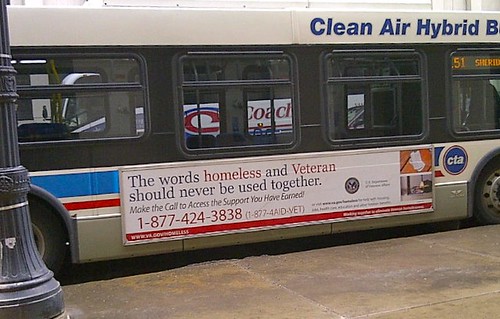
[Chicago Transit Authority bus outside Union Station.]

American Public Transportation Association
APTA awards six Local Transit Coalition Grants, which "support grassroots coalitions and their advocacy efforts to achieve public transportation goals on the state and local levels." These include education and advocacy campaigns. The current winners are:
* Arizona Transit Association (AzTA), Gilbert, AZ, which will use the grant award to support a first-ever statewide poll of voter preferences for public transit in Arizona.
* Community Transportation Association of Idaho (CTAI), Boise, ID, which is working with Idaho Smart Growth and community leaders to place the question of local option tax authority on the November 2012 ballot.
* Friends of Transit for Kalamazoo, Kalamazoo, MI, which will support grassroots advocacy efforts to secure local funding for public transportation services in Kalamazoo County and to increase public transportation funding in the state and federal budgets.
* Transit Alliance, Denver, CO, which will continue its educational efforts on the benefits of public transit in the Denver metropolitan region. The group is working with other regional stakeholders to identify ways to solidify long-term leadership and advocacy for the region’s livability.
* Transit Now Nashville (TNN), Madison, TN, which is partnering with the Metro Nashville Public Health Department to develop a pilot educational program focused on incorporating public transportation as a component of a healthy lifestyle.
* Washtenaw Partners for Transit (P4T), Ypsilanti, MI, which advocates for reliable funding to implement the 30-year Ann Arbor Transportation Authority Transit Master Plan.

Smart Growth Achievement Awards


Environmental Protection Agency

Last week at EPA, the agency celebrated this year's Smart Growth Achievement Awards. Terms like mixed-use, transit-oriented and walkable figured prominently. While none of the projects was a transit project, some provided access to transit and sought to engineer transit-oriented living. Two stand out from a transit perspective.
* LEED-platinum residential project in downtown Albuquerque, N.M., which is affordable and placed near transit, intercity transportation, restaurants and shopping. The site was previously a bus holding facility.
* Plan El Paso that envisions three mixed-use, transit-oriented neighborhoods that will make possible responsible environmental stewardship and reduced car usage. Bus rapid transit service has already started.

[View of California coast.]

Big Partnerships in a Big State


From the newsletter of the National Complete Streets Coalition:
Though most everything else is bigger in Texas, AARP Texas isn't convinced mobility options for the state's aging population are the right size. Volunteers have begun conducting pedestrian safety audits across the state, including in El Paso, Dallas, Houston, Beaumont, Sherman, San Angelo, Austin, San Antonio, and McAllen. This information will be used to make the case for more Complete Streets solutions, including a renewed push for a state law when the legislature meets again in 2013. A bi-partisan group of legislators put forward a Complete Streets bill this year, but it failed to reach the floor in either chamber.

Friday, September 2, 2011

Demand for Transit and Long-Distance Options

I am struck by the confluence of information floating across my screen about the more and more mainstream notion of transportation options in different settings, local, rural, urban, and regional.

National Association of Development Organizations
Exploring the Role of Regional Transportation Projects as Rural Economy Drivers is a NADO research report that looks at three positive experiences with transportation-led economic development projects. Funding sources are also discussed.

(1) Vermont: Construction in Brattleboro of a passenger intermodal transportation hub. The transportation hub, just blocks away from the Amtrak station, added to the downtown 300 parking spaces, bicycle racks, a parking enforcement office, street-level commercial space, and a connection to existing local and regional bus service. The results are fewer empty storefronts downtown, a new theater, and plans for renovating the Amtrak station and building a nearby mixed-use retail and multi- family residential project.

(2) Alabama: Creation of Baylinc, the first multi-county public transportation system in Southern Alabama. The report details the funding hurdles, importance of potential commuter service demand and effective partnerships with local leaders and transit systems. The result is the planning of other regional services, including ferry service and a guaranteed ride home component of commuter service. The lesson emphasized is not to give up on a good idea.

(3) Oregon: Recent projects of the Central Oregon Intergovernmental Council (COIC), with the support of regional partners, in opening a ride brokerage call center, preparing a coordinated regional public transportation plan, designing a bus system, building an intermodal transit hub, and starting local and regional bus service. That service is now serving 200,000 riders per year, with a shift from "a transit- dependent population (low-income, older adult and disabled customers) to a population that chooses public transit over other available transportation options ... helping boost the local economy." Although serving the wider public was not part of the plan, early-adopter human service agencies and transportation-challenged individuals convinced small communities and agencies to support public transit. There are now plans to partner with the business community and add pedestrian and bicycle connections. The advice of one participant is to "[c]reate a story of the problem and have data available to demonstrate a need for the proposed service. "

NADO also issued new reports about air quality projects (with one transit example), emergency planning and economic recovery after disasters.

Long-Distance Connectivity


American Bus Association

The ABA is promoting the $8.8 million that the Federal Transit Administration is offering for wheelchair lifts as part of its Over-the-Road Bus (OTRB) Accessibility Program. The ABA has a special grant information webpage with details and contacts for assisting with grant applications. The deadline is Sept. 12, 2011.

ABA mentions Who Rides Curbside Buses? A Passengers Survey of Discount Curbside Bus Services in Six Eastern and Midwestern Cities, a survey of passengers of intercity curbside bus service about what modes they are taking their business from and also examines the differences between travelers on these buses and on conventional carriers. "Curbside bus companies have attracted publicity for their steeply discounted fares, free wireless internet, and express services on routes that had seen little new service in decades." The 14-page report was prepared by the Chaddick Institute for Metropolitan Development at DePaul University.

The buses are generating trips in the two areas studied, East Coast and Midwest cities. Their fares undercut Amtrak's, are competitive with car travel, and offer free wifi. On the East Coast, where Amtrak's Northeast Corridor service is a popular option with frequent trains, the curbside buses are stealing business, though Amtrak is still showing ridership increases. In the Midwest, bus passengers are forgoing automobile travel add airplane trips.

Young Demographic


The age 18-25 age group represents a large segment of the curbside bus market and though I have seen many people outside this age group board those buses, including me, there is no question that it is mostly an under-30 crowd. Perhaps due to the nature of their travel and not being as concerned with time (or more concerned with free wifi at low cost), personal rather than business trips predominate. A huge difference with the conventional bus market is the over 90 percent use of portable electronic devices. The only greater percentage use is on the Acela, which costs a whole lot more, is the quickest option (rivaling the plane) and generally has much more expensively dressed travelers.

The ABA also reports that Megabus in the United Kingdom is experimenting with sleeper service, including one's "very own bed," on overnight service between Glasgow and London.

Friday, April 15, 2011

How to Get Folks on the Bus

The American Bus Association posts a link to a long article on the Bloomberg Business Week news site about still-growing intercity bus services.

An absolutely fabulous article appears in the Atlantic about convincing commuters to switch to transit. It is an article about cultural change, convenience, meeting needs and making car-free (for at least one major source of trips) seem "cool." Thanks to Chris Zeilinger for the tweet about this.


Mobility Management Conference in Indianapolis on June 6-7, 2011. Sessions will cover the different partnerships that allow for customer-focused and community-generated transit and mobility services. Also, information about livability, one-call/one-click services, statewide perspectives, and employment transportation, among others. The Partnership for Mobility Management is working together to put on the conference. There will be representation from the professional worlds of transit, community transportation services, workforce,
regional planning and state departments of transportation.

President's Deficit Reduction Proposal

Yesterday's New York Times coverage of the President's deficit reduction speech, did not mention transit, high-speed rail or any medical, human service or employment transportation programs. In my pre-vacation mode this morning, I admit that I am not scouring the news sites or Consortium webpages, but there are always news alerts and emails that arrive by this point whenever a major budget-related proposal is made that mentions these programs. The President's speech echoes themes from the bipartisan National Commission on Fiscal Responsibility and Reform. A November 2010 blog post linked to the Commission co-chairs' recommendations, summaries and responses to the Commission's work. The full Commission recommended that the gas tax be increased by 15 cents and would "limit[] spending to actual revenues collected by the trust fund in the prior year once the gas tax is fully phased in." Transit and other non-motor vehicle modes were not mentioned.

Tuesday, March 8, 2011

Policies and Funding for Rural and Coordinated Transportation Options

Community Transportation Association of America (CTAA)
CTAA has on its homepage a collection of materials that declare the benefits of rural transportation services, including rural public transit, and an explanation of the history and scope of Medicaid's non-emergency transportation (NEMT) benefit.

American Bus Association
(ABA)
ABA responds to the Obama Administration's recommendation for funding to develop a high-speed rail network with a reminder that intercity bus travel is a far less expensive form of long-distance publicly-available transportation.

Quoting from the ABA publication, the Insider, the association declares:
"We're asking lawmakers to invest in motorcoach transportation," said ABA President and CEO, Peter J. Pantuso, CTIS. "Even under the best circumstances, a high-speed rail network will not become a reality for years. Motorcoaches are here today. We cost a tiny fraction of what high-speed rail will cost. We are environmentally friendly, and we provide service to rural Americans that high-speed rail will never be able to reach. When you look at all of that, it just makes sense to go with the motorcoach."

The Insider article emphasizes the importance of motorcoach service to rural Americans. Bus service still covers a much greater proportion of rural residents than current or projected train lines.

Detailed Look at Coordination of Government Programs


In his NRC Capitol Clips post on March 4, Chris Zeilinger, the Director of the National Resource Center for Human Service Transportation Coordination (NRC), does a terrific job of summarizing and examining the findings of the recent Government Accountability Office report, Opportunities to Reduce Potential Duplication in Government Programs, Save Tax Dollars, and Enhance Revenue. The blog finds in the report strong evidence to support coordination of government services. The report is well worth reading and transportation coordination is addressed at pages 48-50, which will appear as 53-55 in your pdf toolbar, and discussion of coordination for the transportation-challenged appears at 134-138 (appearing as 139-143).

Speaking of coordination, I read an interesting opinion blog in the New York Times online edition about coordination to improve education for low-performing public school systems. Coming Together to Give Schools a Boost talks about strong coordinating organizations and partners with clear goals and a focus on performance measures. I will not say that the strategies mentioned should be transferred to transit and transportation services, but the model is worth considering for its comprehensiveness and the honest assessment of its proponents that new methods were needed.

Wednesday, December 22, 2010

High Demand for Intercity Bus Service and Insights into Quality Concerns of the Transportation Challenged

A few years ago, intercity bus companies took notice of successful routes that had sprung up to serve Chinatown in New York. Those companies and a few new ones changed the traditional model of station-to-station service and started curbside departures and arrivals, Internet-supplied tickets, free wifi, comfortable seating and very cheap prices compared to the airlines and Amtrak - prices competitive with driving.

Now a report highlighted by the American Bus Association, from DePaul University, The Intercity Bus: America’s Fastest Growing Transportation Mode - 2010 Update on Scheduled Bus Service, examines the numbers, the phenomenal increase in demand, though generally limited to major cities with good public transportation, that outstrips growth for air and long-distance train travel. Megabus alone boasts a one-year growth in ridership of almost 50 percent, with "33% ... a conservative middle-ground estimate of the growth in curbside traffic between the 4th quarter of 2009 and 2010."

Good Service Brings Alternative to Car Use and Ownership

Though Amtrak pointed to much more modest ridership increases this past year, Amtrak does not have the luxury of adding service and destinations very easily. The bus phenomenon of the last few years demonstrates the potential demand for long-distance service even in places where that demand has not been addressed. Indeed, the bus phenomenon also shows that for "discretionary riders" a nice atmosphere goes a long way, even without the guarantee of on-time arrival that a train generally delivers.

The report makes the rather large claim that:
curbside buses encourage “transit lifestyles” that place comparatively little emphasis on single-occupant automobile travel (and more emphasis on common-carrier providers) and thus apparently lower carbon footprints per mile traveled.
I think that intercity buses are a piece of the mobility puzzle for many people, a piece that means a car is not a necessity for everyone. The buses also provide a cost-effective way for families to reduce car use, which the train and air travel do not provide, a fact in evidence on the highways during the Thanksgiving weekend and the winter holidays every year.

Sea of Buses

In contrast to even a few years ago, now when you are entering the Lincoln Tunnel to head into the city for Thanksgiving, you see a sea of buses, a good percentage of which are these intercity carriers. And to what do we owe this recent change in the mobility landscape? A flexible private sector that has the ability to make changes without the delay of regulatory changes, infrastructure building and repair, and the other factors that slow down public endeavors. Not saying the private sector can do it all, just that this is a good example of its role in publicly-available transportation as well as the insights into markets that the private sector provides and that other public and private modes can learn from.

Deviating from Private Car Ownership

And intercity buses are not the only part of the private market that is seeing increases, creative car sharing businesses are being developed and spreading. Still an urban phenomenon, companies like Flex Car are branching out into more cities. RelayRides adds a new type of business model to the mix. The company, backed by Google, enables people to rent out their cars to friends or strangers for a nominal fee with a standard agreement that includes an insurance arrangement. Read about one person's experience in the Cambridge area. It started in Cambridge and is commencing service in San Francisco.


Different Picture in the Heartland

In the heartland of South Dakota, the availability of mobility options is a very different situation than in the urban centers on the East and West coasts. This is not a transit-rich area; in fact, for people with disabilities, the need is all too real. Assessing Existing and Needed Community Transportation for People with Disabilities in North Dakota outlines the challenges - "Adequate shelter from the weather while waiting, inconvenient schedules, and having a place to sit while waiting were most often cited as a major problem for people with disabilities." Added to the list a little more into the report is difficulty of boarding.

These seem like universal design issues. Though adequate shelter, for example, might allow a person with a disability to ride transit, it also makes transit more welcoming to the parent with a toddler and the guy who is considering taking the bus during the winter. Aspects of street accessibility to transit were listed as problems for more than half of the survey respondents, as was safety and travel information.

[T]hose who do not use transit were significantly more likely to say service is not available, transit users were less likely to think they are not capable of riding, and those who used transit in the past but do not anymore were more likely to say they do not have enough information.

The results indicate it is not lack of need that keep people with disabilities from using public transportation. Rather, lack of service, lack of information, thinking they are not capable of riding (whether true or not), and fear of riding can likely explain many of the differences between those who use public transportation and those who do not.

Insights into Quality of Paratransit Service

The report also addresses the challenges of using paratransit and the unique situation of people with cognitive impairments.

Two-thirds of respondents said that service not being available when they need it was a problem; 35% said it was a major problem. Other significant problems were unkept schedules for pickups and drop-offs or long waits, the need for scheduling trips too far in advance, and trip times that are too variable or unpredictable. Respondents were least concerned about the vehicles, in terms of their mechanical condition, accessibility, and seating availability.

This is an insightful and detailed study that would be helpful to anyone in transit or those serving people with disabilities. Really, it shows the opportunities in terms of demand and advances in quality of life that mobility options, sometimes the synergy of pedestrian-friendly streets and transit, sometimes other options, can provide.

Spreading the Seedlings of Creativity


I think that the innovations of the private market in cities, the willingness of Americans all over the country to vote for more public transportation funding, and the increasing unattractiveness of a fuel-intensive lifestyle will spur changes in places like South Dakota. Maybe different models of volunteer driver programs and vanpooling are just around the corner for rural areas and other places where people do not wish to or are unable to drive.

Here's to allowing Americans all over the country to have more and better mobility options. Next year, I want to hear about how you picture mobility; I want to learn from you about places where good transportation choices (be they taxis or shared rides), good street networks and good transit are working. Let's learn from the success stories, build upon them, and adapt them to the amazing quilt of places of we live in.

Tuesday, November 30, 2010

Ideas for a Sustainable, Multi Modal Transportation System

The American Bus Association (ABA) posts a link to a report of the Mobility Choice Coalition, of which ABA is a member. Taking the Wheel: Achieving a Competitive Transportation Sector Through Mobility Choice discusses the history and biases of current transportation infrastructure and policy, with recommendations for a multi-modal future that incorporates the public and private sectors.

Recommendations include:
* Transparent pricing - paying for the road services one uses;
* Fair allocation of costs based on use, savings of oil and damage to roadways;
* Moving authority for decision making to metropolitan level with national performance standards - to encourage more competition among mode choices; and
* Technology upgrades for a more efficient system.

A Menu of Suggestions

Though the report calls for transparent pricing, it includes only transportation costs and not many of the external costs of a car-dependent lifestyle, such as public health consequences. It does call for mileage-based insurance premiums to account for the high rate of injury and death that automobile travel results in and the increasing odds of accidents that come along with increases in mileage. Among the strategies mentioned are congestion pricing, HOT lanes, truck-only lanes, fees to reflect oil's national security costs, telecommuting, high-speed and inter-city rail, transit vouchers for low-income riders, apportioning transit dollars for realizing fuel savings through high-load routes and modes, and changing land-use rules to satisfy demand for mixed-use walkable communities.

The coalition estimates that by 2030, the recommended strategies could save 779 million barrels, "or more than 10 percent of projected on-road oil consumption." The estimates are based on "the Department of Energy’s Annual Energy Outlook (AEO) 2010, and includes all of AEO’s assumptions regarding vehicle miles of travel (VMT) and vehicle fuel efficiency to 2030."

DC's Sustainability Plan

The Department of Transportation for Washington, D.C., the equivalent of a state department of transportation that also has jurisdiction over local roads, releases its Sustainability Plan 2010, which promotes transit, biking and walking and seeks to reduce energy consumption.

In the section about linking land use to transportation, the plan announces that "[t]he program revitalizes major urban corridors by improving transportation options, increasing streetscape attractiveness and attracting businesses and residents to the area. It also provides environmental benefits through smarter and more efficient use of land resources."

In terms of its strong endorsement of a multi-modal approach, the program is progressing with:

* Expanding and increasing transit services, such as designing and constructing a streetcar system and a water-taxi system.
* Developing multimodal transportation projects that consider roadway, pedestrians, bicyclists and transit improvements.
* Implementing TDM strategies, such as car sharing, carpool, vanpool, transit subsidies and parking management programs.

The plan also covers economic and social justice impacts. It envisions itself as a tool to spur economic activity and to save on infrastructure costs. It also seeks, without concrete details, to equitably serve low-income communities.

Monday, November 29, 2010

Buses: Cuts and Expansions

The Amalgamated Transit Union has posted articles about proposals for transit service reductions across the country. The mayor of Jackson, Miss., is calling for ending Saturday service and laying off JATRANS employees. Disability advocates are opposing the cuts. A 35 percent cut in service, as well as fare increases, might be coming to Pittsburgh - eliminating service to 50 neighborhoods. And in Washington, D.C., proposed reductions threaten to affect 70 routes, impacting 400,000 riders.

Not Cutting Everywhere


The American Bus Association posts articles about the resurgence of the bus industry. Megabus, providing low-cost, high-quality service to major East Coast cities, is adding routes to Southeast destinations, such as Richmond, Va., Knoxville, Tenn. and Raleigh, N.C. It is also adding direct service between Washington, D.C., and Boston. The bus company, along with others like it, requires tickets purchased online and offers free Internet service. It does not have stations. Ridership has increased by 50 percent this year.

Thursday, September 2, 2010

Facts & Assistance for Helping People with Disabilities

Today's American Public Human Services Association (APHSA) newsletter, Working for Tomorrow, reports "[p]eople with disabilities are much more likely than people without disabilities to consider inadequate transportation to be a problem (34 percent vs. 16 percent, respectively)— a gap of 18 percentage points." The newsletter also gives details of upcoming changes to Medicaid.

Contact Nanette Relave (202-682-0100 x241; nrelave@aphsa.org) for subscription information.

Making Service Truly Accessible

The American Bus Association and Easter Seals Project ACTION are jointly featuring the Motorcoach Operator’s ADA Pocket Guide in a two-part webinar, Using the Motorcoach Operator’s ADA Pocket Guide, starting Sept. 22. Staff from Jefferson Bus Lines will explain how their company has made its service accessible for people with disabilities.

Wednesday, August 25, 2010

Legislation
For information about recent legislative activities related human services programmatic and funding decisions, the American Public Human Services Association has a nice summary linked to its homepage. Information about TANF and SNAP (food stamps) is included.

Events

American Bus Association - National Rural Public and Intercity Bus Transportation Conference, on October 24-27, 2010, in Burlington, Vt. Sponsored by the Transportation Research Board, the conference will feature accessibility, rural transit policy and planning, alternative fuels, intelligent transportation systems and rural transit, regional systems, networks and coalitions, operations, safety, and security, and tribal transportation.

New online classes at the American Public Works Association include emergency preparedness and designing complete streets for all users.

Monday, June 14, 2010

Livability and Legislative Efforts for Rural Areas

Billy Altom, Executive Director of the Association of Programs for Rural Independent Living (APRIL) and Robin Phillips of the American Bus Association participated in Transportation for America’s Congressional lobby day for its rural and small town partners.

The issue for the participants is access, whether to jobs, grocery stores, or medical care. “Many felt their towns, tribes or counties were ready to move on innovative projects that improve access and quality of life, if only federal policy would give them a little nudge. Far from asking Washington to tell them what to do, they were asking for resources to make change for themselves possible.” At a panel to discuss these issues, Altom talked about the transportation challenges facing older Americans and people with disabilities.

He called on audience members to no longer see those with unique transportation needs – whether due to reliance on a wheelchair, inability to afford a car or age-related limitations– as an “us versus them” situation. Getting transportation right is not just about changing public policy, Altom said, but “changing public perception.”

The Lobbying Day effort is supportive of the continuing statements of Secretary of Transportation Ray LaHood. On May 6, 2010, Secretary of Transportation Ray LaHood testified before the Senate appropriations subcommittee about livable communities. He specifically addressed rural areas in terms of pedestrian friendliness, transportation options, and the threat to farmland of suburban sprawl. The Secretary gave the example of Bath, Maine.

Bath is a small town in southwest Maine whose historic downtown area is a model of a livable community. The town provides two trolley loops to transport residents and tourists through downtown, reducing the need for on-street parking. Bath’s street design encourages citizens to get out of their cars, which in turn supports local merchants through increased foot traffic.

The Secretary for the Department of Housing and Urban Development (HUD) also spoke and stated that HUD is “looking at creating a separate, special funding category for small towns and rural places." The testimony can be found at http://appropriations.senate.gov/ht-transportation.cfm?method=hearings.view&id=ff4c98a0-58a1-4182-a9a2-5b718da15266.