Tuesday, December 20, 2011

What Livability Means: Rural Areas and State Policies

Last year, 32,885 people were killed on the nation's roads, according to Secretary of Transportation Ray LaHood in a recent blog post. Rural roads witness a far greater rate of accidents, injuries and deaths than urban roads. The Secretary's words are chilling.
[D]river distraction continues to be a significant safety problem. For example, in a survey we're releasing ..., more than three-quarters of the drivers told us they answer calls on all, some, or most trips when they're behind the wheel. They also said there are very few driving situations when they would not use the phone or text, and that they rarely consider traffic situations when deciding to use their phone. That behavior poses a safety threat to everyone on the road.
We owe our rural neighbors mobility options beyond the single-occupancy vehicle. To bring options to people in every type of community involves partnerships and an eye on the prize of what type of transportation options a community needs, or, given the realities of funding scarcity, what kind of transportation service a community or region desperately needs. This blog addresses the "how" of options that are available and what national organizations, government at every level, and other partners are doing to make getting from here to there (channeling Dr. Seuss) easier.

Technical Assistance


Local coordination stories are featured in today's NRC Technical Assistance News about how communities are growing or reconsidering transit and transportation services. Stories come from York, Pa., Corpus Christi, Tx., and Portland, Or.

From our technical assistance network, an offering that national organizations and state and local stakeholders may be interested in is the National Transit Institute webinar on Jan. 12, 2012, Public Transportation Systems as the Foundation for Economic Growth (RRD 102), which examines the experiences of four cities outside the U.S., Istanbul, Cairo, Johannesburg, and Cape Town, through the eyes of staff from much-smaller American transit systems and cities who participated in the Transit Cooperative Research Program (TCRP) international study mission.
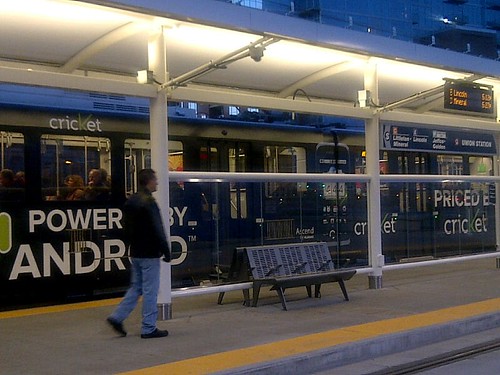
[A light rail area of Denver's upcoming new Union Station multi-modal hub.]

What Is Rural Smart Growth?

Federal Interagency Partnership for Sustainable Communities
Supporting Sustainable Rural Communities is a partnership report that presents brief case studies and explanations of benefits of livability for rural communities. The report seeks to make the practical case for livability outside its usual metropolitan area or urban contexts. Walking, biking, transit and economic development are part of the usual cast of livability characters discussed by the federal partner agencies, the Department of Transportation, the Environmental Protection Agency, and the Department of Housing and Urban Development, in collaboration with the Department of Agriculture. A list of staff contacts at each agency appears in Appendix B.

The agencies are promoting community self-determination in rural areas, espousing particular strategies for economic vitality that also support transportation-challenged populations, historic downtowns and rural landscapes and agriculture. In an agency-cross-cultural exchange, the report explains the relevant programs of each agency to rural areas. Performance measures are suggested for each type of goal - whether environmental, housing, land use, transportation, economic. Case studies are from many sparsely populated places, especially from the Plains to the West Coast. My favorite transit-focused case studies are the Opportunity Link in Montana, the Tennessee Intercity Bus Program, and the Downeast Transportation and Island Explorer transit service in Maine, which grew out of a meals-on-wheels program.

State Legislation and Livability

AARP
I attended the recent AARP Public Policy Institute forum on aging in place and read the report connected with the event. Aging in Place: A State Survey of Livability Policies and Practices was a joint venture with the National Conference of State Legislatures. It presents case studies about transit, human services transportation, pedestrian safety, volunteer driver programs, transit-oriented development, and housing-related issues. There is an appendix with a summary of state laws and programs. AARP and NCSL "offer state legislators and officials concrete examples of state laws, policies and programs that foster aging in place."

The report gives many state legislative examples and points out which ones are mandatory and which do not actually require changes. One concrete example given of the dollars-and-cents ramifications of sprawl and exclusively auto-centric communities versus more compact and mixed-use development concerns emergency service delivery in Charlotte, N.C.
Connectivity also reduces the cost of providing emergency services. In Charlotte,
the most efficient fire station—in a connected 19th-century neighborhood—served 26,930 households in 14.1 square miles with a per capita life cycle cost of $159 per year. In contrast, the least efficient station—in a sprawling community built in the 1980s and 1990s—served only 5,779 households in 8 square miles at a per capita life cycle cost of $740 per year.
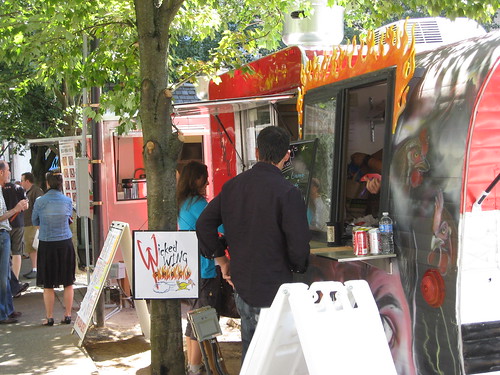
[Portland's round-the-block food cart destinations are a wonderful example of a transit-oriented, mixed-use, neighborhood's potential offerings.]

Variety of State Action


The report discusses what is necessary in terms of transportation and pedestrian-friendly street networks for people to age in place and the movement at the state legislative level on related policies. From Virginia's complete streets legislation to Utah's transit-oriented development, the report contains many examples of programs and laws that are the starting blocks for communities to be hospitable to a wider range of transportation modes. An example of progress is Montana, a very sparsely-populated state.
Three years ago, the state had nine rural transportation systems; today, there are almost 40. To achieve this, the state went to city and county governments and several county Councils on Aging (each of which already operated some type of bus service) and offered to help them devise and pay for a coordinated plan. “We went to these Councils on Aging and said, ‘You’re already running a senior bus service; if you open your doors to everyone, print a schedule and follow the FTA guidelines, we will help you pull it all together and receive FTA funding,’” said [Audrey] Allums. The localities have provided matching funds by using Title III-B Older Americans Act money, property taxes, donations and other local government money.
What Is a Citizen to Do?
Idaho Smart Growth
Idaho Smart Growth releases a citizen's guide that could easily function as a template for other states and communities. Language is plain for laypeople. It defines livability concepts and walks through jurisdictional responsibilities and steps for becoming involved in planning and community participation in land use, transportation, and public health decisions. Included is information specific to Idaho and local organizations, but most of the guide and resources listed are relevant nationally.

Tuesday, December 13, 2011

Models to Improve Transportation for Veterans, Patients and People with Disabilities

Community Transportation Association of America
CTAA's National Resource Center for Human Service Transportation Coordination released NRC Report: Transportation for America's Veterans and Their Families, which discusses improving transportation for our nation's veterans through partnerships and coordination. Examples of the work of regional ambassadors are given. The NRC also maintains a webpage "bookshelf" with veterans transportation resources.

Life-Saving Transportation


CTAA also distributed the Dialysis Report, which discusses the dire, complicated transportation demands that dialysis patients present.
The crux of the transportation challenge is that the majority of dialysis patients are covered by Medicare, which — unlike Medicaid — does not offer non-emergency transportation as a benefit. Three out of four dialysis patients in the U.S., are Medicare primary, meaning that Medicare sets the reimbursement rate and pays 80 percent of that amount ...

Indeed, in background discussions with community and public transit officials around the country for this article, a common refrain was the difficult position in which many transit operators find themselves — how to continuously add new dialysis patients to the transit schedule with no means of payment.
The situation places transportation providers between the proverbial rock and a hard place. CTAA is advocating for a funding mechanism within Medicare and for increased kidney organ donation. "Transplants can add decades to people’s lives and significantly forestall the need for dialysis, but only when the needed organs are available."

Solutions Possible to Realize Decades-Old Commitments

Association of Programs for Rural Independent Living

APRIL's Executive Director, Billy Altom, testified before the Senate Health, Education, Labor and Pensions Committee about the need for affordable, accessible and available rural transportation. Forty years after the Urban Mass Transportation Act and 20 years after the passing of the ADA, Altom argues, "minimal or nonexistent transit services in rural areas still create serious barriers to employment, accessible health care, and full participation in society for people with disabilities."

Altom sees some solutions that are working - mobility management and voucher programs. Altom praised the Easter Seals Project ACTION Mobility Management Independent Living Coaches program and he cited as an example the Center for Independent Living for Western Wisconsin Regional Mobility Management/New Freedom Program, which provided 12,000 rides last year and coordinates in seven counties with public and private transportation providers. More than 140 volunteer drivers provide the rides and the program is expanding into an 18-county area. Already weekly rides are being supplied to 130 veterans.

Partnership for Mobility Management
member Denise Larson is the mobility manager for the program. She also serves on the Partnership's advisory committee.

Another Type of Coordination

American Public Human Services Association

Bridging the Divide: Leveraging New Opportunities to Integrate Health and Human Services is APHSA's new report about the value added of coordinating and aligning health and human services for clients beyond eligibility and enrollment for a "customer‐focused, one‐stop shop, 'service home'." Such coordination makes sense, according to the report, because:
Many of the same people who qualify for Medicaid, CHIP or some level of premium subsidy identified through the Exchanges also qualify for one or more human service assistance programs.

The positive impact of coordinated care and integrated case management on improving the overall health and well‐being of individuals and populations— strengthening families, achieving employment and independence, improving the well‐being of children, youth, people with disabilities, seniors and other vulnerable populations—is well documented. Better outcomes mean healthier, safer, stabilized individuals and families with a better chance of sustainable independence from government services and long‐term personal success.
The report contains case studies of what several states are doing and the impending impact of the new healthcare law.

Wednesday, December 7, 2011

What it Takes to Walk - When You Cannot See


American Council for the Blind

ACB releases an updated Pedestrian Safety Handbook, a publication that informs the visually impaired and blind communities "about contemporary approaches to assuring safe paths of travel for blind pedestrians and effective ways to advocate for accommodations like accessible pedestrian signals, tactile warnings at the edges of curb ramps, and mechanisms for routing travelers safely through problematic intersections." This is a valuable resource for two reasons. First, this handbook is an excellent guide to the ADA and how it is implemented in states and localities. Step-by-step advice is given about how to work within the ADA's requirements and when and how to advocate for accessible pedestrian sidewalk and intersection features. Its value is not limited to those who are visually impaired.

Second, the handbook provides detailed information for people who are blind and visually impaired about navigating streets and intersections and what improvements are currently available. Considering how much we who are sighted rely on visual cues, this resource aims to supply those types of details via senses other than sight. For example, cues are described and possibilities explained for what happens at the end of the building line. Airflow changes and a curb is the most frequent, but not the only, possibility of what is in close proximity.

Tuesday, December 6, 2011

Local Success Stories

In the NRC Technical Assistance News
State coordinating council profiles
Mobility management grants
Livability briefs
Online dialogue about senior transportation
I&R training
FTA procurement facts

[Details high up inside Chicago's Union Station.]

Planning Assistance

National Association of Regional Councils

NARC's newsletter welcomes communities to apply for the American Planning Association's Community Planning Assistance Team (CPAT) program. Communities facing a range of challenges including, but not limited to, social equity and affordability, economic development, sustainability, consensus building, and urban design are well-suited for assistance through the program. Demonstrated need for assistance is an important qualification. The deadline for applications is Dec. 13, 2011.

Transit Partnerships


American Bus Association

The ABA celebrates the new bus deck at Union Station in Washington, D.C., making the station truly multi-modal, with intercity bus and train services as well as local transit and bikeshare. The Union Station parking garage now accommodates Megabus, Bolt Bus, Washington Deluxe, DC2NY and tour bus parking.

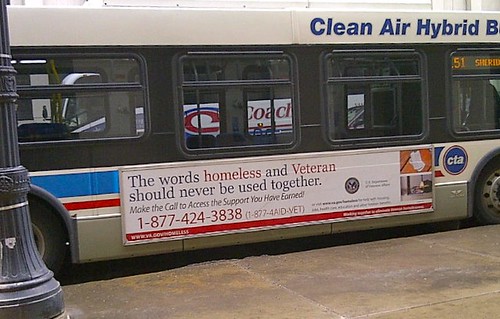
[Chicago Transit Authority bus outside Union Station.]

American Public Transportation Association
APTA awards six Local Transit Coalition Grants, which "support grassroots coalitions and their advocacy efforts to achieve public transportation goals on the state and local levels." These include education and advocacy campaigns. The current winners are:
* Arizona Transit Association (AzTA), Gilbert, AZ, which will use the grant award to support a first-ever statewide poll of voter preferences for public transit in Arizona.
* Community Transportation Association of Idaho (CTAI), Boise, ID, which is working with Idaho Smart Growth and community leaders to place the question of local option tax authority on the November 2012 ballot.
* Friends of Transit for Kalamazoo, Kalamazoo, MI, which will support grassroots advocacy efforts to secure local funding for public transportation services in Kalamazoo County and to increase public transportation funding in the state and federal budgets.
* Transit Alliance, Denver, CO, which will continue its educational efforts on the benefits of public transit in the Denver metropolitan region. The group is working with other regional stakeholders to identify ways to solidify long-term leadership and advocacy for the region’s livability.
* Transit Now Nashville (TNN), Madison, TN, which is partnering with the Metro Nashville Public Health Department to develop a pilot educational program focused on incorporating public transportation as a component of a healthy lifestyle.
* Washtenaw Partners for Transit (P4T), Ypsilanti, MI, which advocates for reliable funding to implement the 30-year Ann Arbor Transportation Authority Transit Master Plan.

Smart Growth Achievement Awards


Environmental Protection Agency

Last week at EPA, the agency celebrated this year's Smart Growth Achievement Awards. Terms like mixed-use, transit-oriented and walkable figured prominently. While none of the projects was a transit project, some provided access to transit and sought to engineer transit-oriented living. Two stand out from a transit perspective.
* LEED-platinum residential project in downtown Albuquerque, N.M., which is affordable and placed near transit, intercity transportation, restaurants and shopping. The site was previously a bus holding facility.
* Plan El Paso that envisions three mixed-use, transit-oriented neighborhoods that will make possible responsible environmental stewardship and reduced car usage. Bus rapid transit service has already started.

[View of California coast.]

Big Partnerships in a Big State


From the newsletter of the National Complete Streets Coalition:
Though most everything else is bigger in Texas, AARP Texas isn't convinced mobility options for the state's aging population are the right size. Volunteers have begun conducting pedestrian safety audits across the state, including in El Paso, Dallas, Houston, Beaumont, Sherman, San Angelo, Austin, San Antonio, and McAllen. This information will be used to make the case for more Complete Streets solutions, including a renewed push for a state law when the legislature meets again in 2013. A bi-partisan group of legislators put forward a Complete Streets bill this year, but it failed to reach the floor in either chamber.

Tuesday, November 29, 2011

Events and Local Coordination Stories

Centers for Disease Control and Prevention
Webinar - Tackling the Question: Will Complete Streets Cost Too Much? - Dec. 1, 2011. Communities Putting Prevention to Work Webinar series presentation about implementing Complete Streets policies and strategies for responding to the cost concern, including examples and resources. The webinar will provide information both about the low cost of many complete streets treatments, as well as ways to talk to transportation professionals about the added value and community support that result from complete streets implementation.

National Association of Regional Councils
Annual conference - Feb. 12-14, 2012, Washington, DC. The conference will focus on the Administration's priorities, Congressional activities, critical policy issues and pending federal legislation that will impact regions. Environmental and transportation policy, livability and the effect of the current U.S. fiscal situation will be addressed.
[View of mid-renovation Union Station area in Denver at dusk.]

Coordination Stories


The Rio Grande Valley in Texas is realistically appraising its coordination and connectivity challenges via its coordinated transportation plan. "The public transit coordination plan was completed this month to comply with Federal Transit Administration rules requiring similar plans to be in place for access to its funding streams, but the study also provided an overview of how well the Valley’s providers have implemented existing coordination efforts." An article in the Brownsville Herald, Study: Valley's Transit Providers Must Connect Services, also explains the plan for further coordination to enable commuting from one city to another in the area. Other transportation services on the horizon are medical and shopping trips and routes with consistent schedules "throughout the day in the Valley’s urbanized areas."

Binghamton, a city in Upstate New York is using its half million dollar Community Challenge Grant, the only one awarded in the state, to engage the community to envision what type of community it should be in the future and follow up on that vision by writing it into its zoning code. A brief television news piece explains.

Monday, November 28, 2011

Legislative Push to Improve Transportation for People with Disabilities

National Council on Independent Living
NCIL published a new position paper on transportation that starts out with the observation that 80 percent of federal transportation funding goes to highways, which discriminates against people with disabilities, along with the unfulfilled promise of the ADA for transit service accessible to all and the lack in rural areas of transportation options and accessible streets for people with disabilities.

NCIL declares 11 goals that it is seeking via the next transportation authorization bill. The following list is edited, but quotes from the position paper.
1. Address the continued discrimination against individuals with disabilities by ensuring through legislation that all public transportation is accessible to and for individuals with disabilities. According to the Rural Transportation Institute, a recent study indicates that only 7 states require public transportation to be wheel-chair accessible under Section 5310. ...

2. Provide major new investments in public transportation and complete street designs ... . The lack of transportation and pedestrian safety and right of way options in many communities is a major barrier to employment of individuals with disabilities. Individuals with disabilities heavily rely on public transportation and the expansions of transportation and complete street options will significantly improve the mobility of individuals with disabilities. ...

3. Include the creation of innovative, creative, universally designed, and accessible and energy efficient vehicles in any future Economic Stimulus, Climate Change, or Surface Transportation Reauthorization Legislation. ... Legislation should maximize the development of federal incentives to increase local and state transit investment. All community and public transportation systems should be able to decide locally when and how to best deploy federal and local investment for either operating or capital uses.

4. Require states to establish an advisory committee to the state Department of Transportation including at least 51% of persons with disabilities and senior citizens, for all types of transportation services. An advisory committee should also be created in counties and/or areas where there are no transportation services, in order to help establish a transportation system to meet the needs of that county. ...

5. Develop a federal standard that requires all taxi fleets to be wheelchair accessible/universally designed that can be adopted by the U.S. Access Board. At a minimum private transportation services such as taxis, limousines and/or shuttle services, must have 10-20% (with a minimum of at least one accessible vehicle) wheelchair accessible/universally designed vehicles.

6. Make all train cars, stations, and any mechanism used to assist with boarding, doorways and vestibules accessible. According to the Amtrak staff at The Piedmont in Charlotte, North Carolina, there are no accessible cars for wheelchair users. As a result, one may be able to get to his or her destination on a car that is accessible but may not be able to travel home because the car on the return train may not be accessible. ... Also, all stations must maximize accessibility improvements including stations not designated as key stations.

7. Create legislation that requires support for mobility management and coordination programs and voucher programs among public transportation providers, other human services agencies providing transportation services, and volunteer driver and aide programs ... by establishing a dedicated funding source for these services. The mobility needs of individuals with disabilities in rural communities are significant. New initiatives to address their unique needs, such as the need for accessible transportation services to transport individuals between the various Municipalities, must be included in any transportation reauthorization.

8. Expand Section 5310 [rural general purpose], the Job Access and Reverse Commute program and the New Freedom program that serves a critical need in the disability community. ... The program should be strengthened by improved oversight and transparency to help nonprofit partners understand how to access the program and assist policy makers understand how the program is being used.

9. Produce all information by transportation authorities for the purpose of informing the general public of their function and schedule of operations in an accessible format upon request. Such formats must address the needs and requests of the patron requesting such an alternative format like large print (18 size font), braille, and computer disk (digital format). In addition, transportation websites must meet the requirements set forth under Section 508 of the Rehabilitation Act.

10. Establish a federal standard that requires all commercial airline carriers, as well as small air carriers, to provide personnel with adequate training in safe methods of transfer for passengers with mobility disabilities onto both small and large aircraft. ...

11. Allow service animals including psychiatric service dogs & emotional support animals (ESA) to follow their user.

ABLE Act

NCIL and other disability rights organizations, particularly those representing people with cognitive disabilities, are advocating for the ABLE Act, which stands for Achieving a Better Life Experience Act. Modeled on the qualified tuition program, the Act would amend the tax code to encourage saving for "disability-related expenses on behalf of designated beneficiaries with disabilities that will supplement, but not supplant, benefits provided through private insurance, the Medicaid program under title XIX of the Social Security Act, the supplemental security income program under title XVI of such Act, the beneficiary's employment, and other sources." These expenses include housing, transportation, education, employment supports, health and wellness, and assistive technology, among others, including spending on public transit or modifying personal vehicles.

Friday, November 4, 2011

Smart Growth Community Assistance and Walkability News

Environmental Protection Agency
EPA has school siting guidelines that include access to transit and biking, as well as walkability.
Connecting a school to a network of sidewalks, bike paths and other infrastructure encourages physical activity by making walking or biking safe and enjoyable. It is also important to provide walking and biking routes that do not bring children close to large roads, highways and other major pollution sources (for both health and safety concerns). Site size, location and design all play a role in determining whether walking or biking will be an option for students. Locations that provide access for students and staff via public transit will also reduce vehicle use as well as potentially promote increased physical activity in getting to the transit stops from both home and school.

More EPA Technical Assistance Opportunities


Through an EPA grant to the Project for Public Spaces under the Building Blocks for Sustainable Communities Program, Livability Solutions will be offering free technical assistance workshops to six to 12 communities around the country. This technical assistance will take the form of one- to two-day workshops utilizing livability tools such as a Community Image Survey (CIS) public engagement tool, a Walk Audit workshop, a Safe Routes to School workshop or a Design Mini-Charrette, among other community-focused analyses and exercises. Selected communities will also be linked to a network of other communities with similar goals and challenges. Each community team will be led by Livability Solutions coalition members.

The application deadline is Nov. 22, 2011. Visit the Livability Solutions technical assistance page for details and the application.

A webinar next week will cover four technical assistance programs under the Building Blocks for Sustainable Communities Program program.

[Bicycle promoting the goods from a bakery in Hood River, Oregon.]

Streets for All Walkers and Wheelchair Users

Access Board
Three weeks left for public comment on Accessibility Guidelines for Public Rights-of-Way. The US Access Board posted the proposed guidelines on its website these are available for public comment through November 23, 2011.

The guidelines will cover sidewalks, street crossings, medians and traffic islands, overpasses, underpasses and bridges, on-street parking, transit stops, toilet facilities, signs, and street furniture. They will apply to permanent as well as temporary facilities, such as temporary routes around work zones and portable toilets.

Issues related to particular disabilities and pedestrian safety are noted.
Wheelchair users usually have a lower eye height above the street than most adult pedestrians, and may be hidden from motorist view behind parked vehicles, plantings, or other visual obstacles. People may have vision, hearing, cognitive, or other considerations that must be considered within the public right-of-way.
Please be aware that certain public comments will be allowed regarding the Access Board's Advance NPRM (notice of public rulemaking) for Shared Use Paths, announced on on March 28, 2011. Although comments were due June 27, 2011, these guidelines are in initial development stages. The proposed guidelines will consider differences between public right-of-way guidelines and recreational trail guidelines. More information is available in the FHWA's Pedestrian Forum newsletter.

Please note that a public hearing will be held in Washington, DC on Nov. 9 at the Access Board Meeting Room, 1331 F Street, NW, Suite 800.

[Buses on Central Park South on a June morning.]

Template for Multi-Modal Street Networks

National Complete Streets Coalition

The coalition is recommending the Model Design Manual for Living Streets. Offered as a street-design template, the manual:
focuses on all users and all modes, seeking to achieve balanced street design that accommodates cars while ensuring that pedestrians, cyclists and transit users can travel safely and comfortably. This manual also incorporates features to make streets lively, beautiful, economically vibrant as well as environmentally sustainable.
For more information about walkability best practices and places, visit the Pedestrian and Bicycle Information Center's walkinginfo.org website, which also houses information about the Walk-Friendly Communities Program. More walkability news and resources are available from America Walks and the Federal Highway Administration's pedestrian resources website.